
This post may contain affiliate links. If you make a purchase through links on our site, we may earn a commission.
As the garden winds down in the fall, there are measures you can take to keep some of your tender plants alive, rather than letting them succumb to winter. In the gardening world, this is called overwintering. There are different ways to overwinter plants. Some can simply be placed in a cool area until spring, while others can be enjoyed as houseplants. There are also tubers that can be lifted and protected, and vegetable plants that can be stored.
If you live in a cold climate, overwintering plants is a great way to keep your favorites alive until next year. And in most cases, it’s pretty easy. You just need to provide some shelter. Be sure to think ahead in the late summer or early fall so the cold weather doesn’t get to them first! I’m always checking my weather app for frost warnings in mid autumn. Sometimes a light frost is okay, but a killing frost will likely be fatal.

Overwintering outdoor plants indoors as houseplants
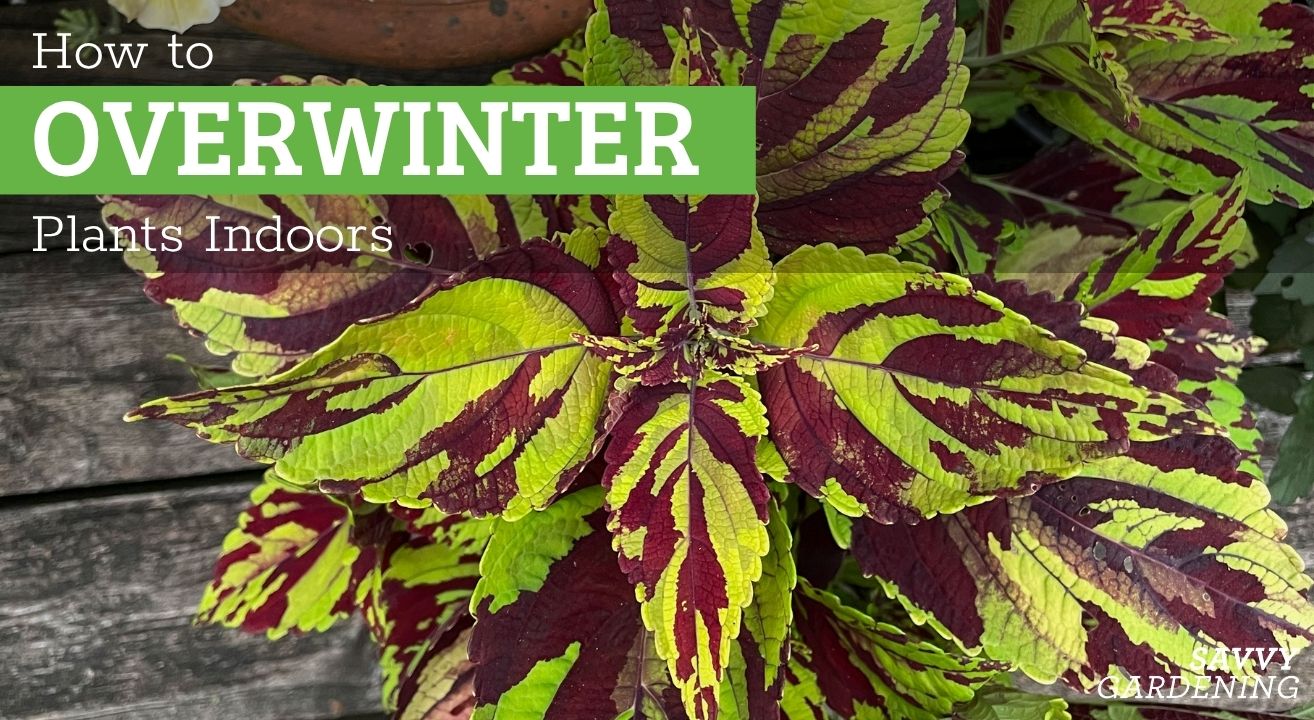
There are a few tender perennials that can be brought indoors and displayed as houseplants, such as begonias and hibiscus (I’ve listed pieces we’ve written with helpful tips at the bottom of this article). My mom will bring her spider plant outside for the summer and then bring it indoors over the winter months. Plants like coleus are often grown as annuals and discarded after the growing season. If you take a cutting, you can pot it up as a houseplant, nurture it over the winter, and bring it back outside come spring.
Before bringing any outdoor potted plant inside, check it carefully for insects. Spray the plant gently with warm water to knock potential insects off the plant. Check leaves carefully on both sides, as well as the surface of the soil.

Overwintering plants that go dormant
Overwintering plants that go dormant over the winter season is a cinch. These no-fuss tropical plants won’t survive our harsh, cold-climate winters, so they like to hunker down and hibernate, just like animals do. To help coax plants into dormancy, you need a cold, dark room where the plants will not freeze. I happen to have a weird little cold cellar room in my basement that is the perfect size for my fig tree. A dark garage or shed, or uninsulated basement will also do the trick.

In the fall, start to keep an eye on the weather forecast. For example with my fig tree, I’ll wait until the leaves start turning yellow and dropping. If temperatures are really going to start to dip, I’ll bring the pot into my unheated garage where the rest of the leaves will drop. At this point you can give the pot one last light watering. The pot can then be brought indoors into a cold cellar for the winter. Check on the soil occasionally to make sure it’s not too dry. It may need the odd spritz of water before spring.
Protecting plants in the winter landscape
For the plants that will stay out in the garden, leaf mulch is a great way to add a little protection before that first frost. It also helps prevent those leaves from being bagged and sent to the curb. It can also provide habitat for overwintering insects, amphibians, snakes, and small mammals. I use straw to cover my freshly planted garlic as winter protection and also to deter nosy squirrels.
Shrub covers can help to protect shrubs from salt, deer and other animals, sunscald, and other winter damage. These can often be found at garden centers in the fall. Many gardeners also use burlap.

Bringing dormant plants out of hibernation
In the early spring, after all danger of frost has passed, you can consider bringing some of your tender plants back outside. Just as you would harden off seedlings, it’s a good idea to acclimate your plant gradually, rather than sticking it in full sun. Start by placing it outdoors in the shade for a few hours, gradually increasing the time. At night, you may want to place the plant in a shed or garage. After a few days of this, your plant should be ready to stay in a sunny spot for its summer home.
More tips on overwintering ornamental plants

I have several rugosa roses in pots. Should I bring them indoors or leave outside?
Rugosas are very hardy and should do well in the pots. However, if you live in Zone 4 or colder, I suggest sinking the pots into the compost pile up to their rims to help insulate the roots. If you don’t have a compost pile, wrap the outside of the pots in a few layers of bubblewrap to insulate the roots. The tops of the plants should be left uncovered.
I have propagated some black lace elderberry, they are pretty small and i live in zone 5. Can I store them in a cold frame or would it be better to bring them into my shed? Thank you!
It’s hard to say… you may want to shelter them in your shed if they are still small. You could also put some in the shed and some in the cold frame to ensure you have some success.
I received a dormant honeysuckle to give as a gift for Christmas . Will it come out of hibernation if I keep it inside, or do I need to keep it outside to keep it dormant?
I would suggest keeping it outdoors, even if you’re just temporarily sinking the pot somewhere in the garden.
I have several plants that are tropical and they go out in my balcony for the summer. I live in Kansas city and the winters here can get to 4 below. This year I have several container plants outside on my balcony that I want to overwinter. I have a horseradish and two licorice roots and two echinacea.. What I want to know is Do I mulch and should I completely cover plants with mulch. I have heard yes and also no… We are expecting first real hard freeze in the next couple days.
I would suggest insulating the outside of the pot if you have to keep them out for the winter. Wrap the exterior of the pot in several layers of bubblewrap or surround the pot with a cylinder of chickenwire filled with leaves or straw. The most important thing is to insulate the roots and protect them from freeze-thaw cycles. You should not cover over the crown of the plant or it could lead to rot.
I keep several house plants on my deck in summer, and bring them inside for the winter. I clean them up, remove debris, and give them a good dose of insecticidal soap first. One of the pkantscis my weeping fig bonsai that loves being outside. Also a Xmas cactus, and other plants whose name I do not know.
Tender perennial herbs such as rosemary and thyme spend the winter in my cold frame.