
This post may contain affiliate links. If you make a purchase through links on our site, we may earn a commission.
Want gourmet lettuce straight from your garden? Plant Buttercrunch, a high-quality butterhead variety with crisp, sweet leaves and buttery heads. It’s easy to grow, quick to mature, and the flavor and texture can’t be beat! In this article you’ll learn all about how to plant, grow, and harvest Buttercrunch lettuce in garden beds as well as containers. And I’ve even included tips on when and how to save lettuce seeds.

What is Buttercrunch lettuce?
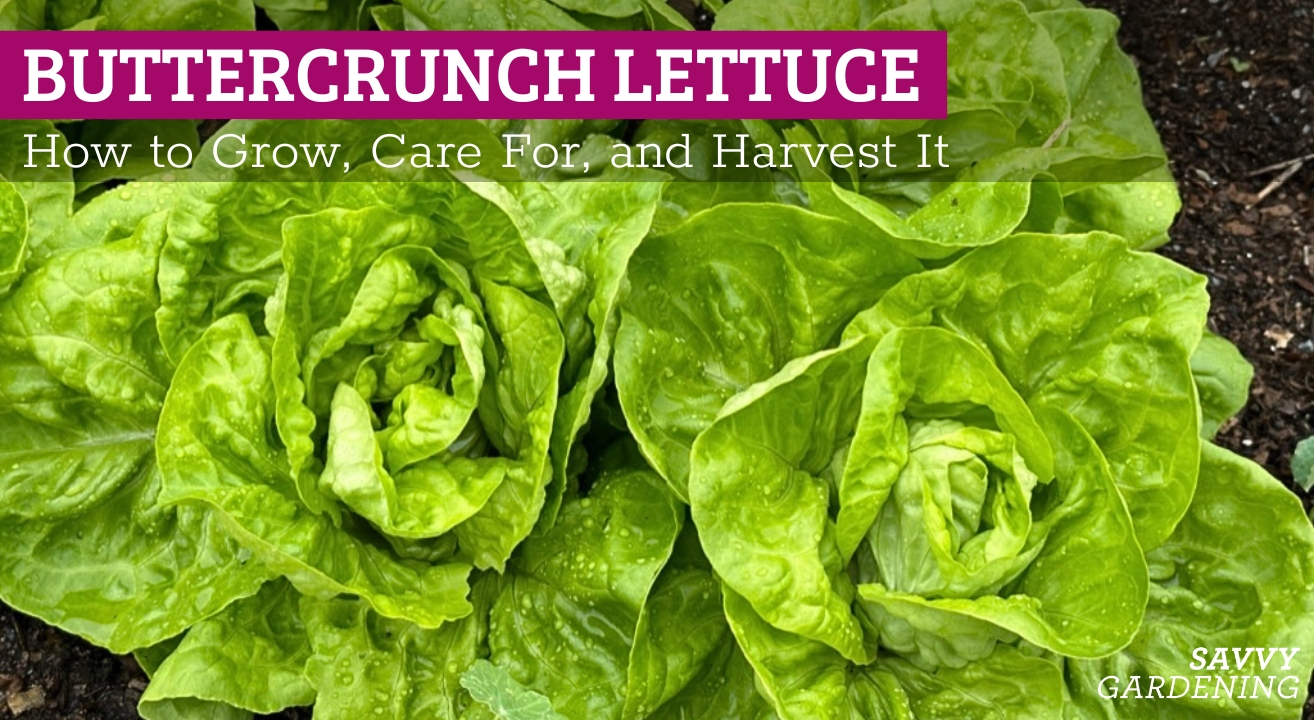
Buttercrunch lettuce, also called Buttercrunch Bibb, is an heirloom variety beloved for its large, thick outer leaves and tender heads of loosely folded leaves. When mature, expect the center rosette to be about 6 inches across. The sweet, mild-tasting leaves are extremely versatile in the kitchen and perfect for salads, as lettuce wraps, or on burgers. This is a fast growing lettuce and ready to harvest as a baby crop 30 to 35 days from seeding or for mature heads 55 to 60 days from seedling. Other amazing Butterhead lettuce varieties include Pirat, Australe, and Adriana.

When to grow Buttercrunch lettuce
Like other types of lettuce, Buttercrunch is a cool season vegetable and grows best in temperatures between 60 and 65 degrees F (16 to 18 degrees C). That said, with a little protection from sun or cold temperatures, you can grow this lettuce any time of the year in many gardening zones.
- Spring – As noted above, lettuce prefers cool temperatures and is a good choice for spring planting. It’s tolerant of light frost and you can start to direct sow seeds 3 to 4 weeks before the last spring frost. Or, transplant seedlings at the same time, just keep row covers handy in case the temperatures drop below freezing.
- Summer – If you want to grow this lettuce in summer, pick a site that offers some shading from hot afternoon sun. Or set up a mini tunnel and cover it with a length of shade cloth to create shading for summer lettuce. Pay extra attention to watering and maintaining a light damp soil as drought stress turns lettuce bitter and prompts bolting.
- Autumn – As summer weather cools, plant Buttercrunch lettuce again. However with the decreasing day length, lettuce grows slower so factor in a bit of extra time from seed to harvest. Direct sow about 6 to 8 weeks or transplant seedlings 5 to 6 weeks before the first expected fall frost date.
- Winter – The arrival of winter doesn’t have to mean an end to homegrown lettuce. Plant in an unheated polytunnel, greenhouse, or permanent cold frame, or cover the lettuce bed with a mini hoop tunnel or portable cold frame when frost threatens. Buttercrunch is cold hardy and can be enjoyed months beyond the traditional growing seasons.

How to grow buttercrunch lettuce
There are two options for growing Buttercrunch lettuce: direct seeding or transplanting.
- Direct seed – If my goal is loads of baby lettuce leaves, I direct sow the seeds outdoors beginning in mid-spring. You can plant the seeds individually so that they’re about 2 inches apart in a grid formation or sprinkle them over the soil surface, trying to do so evenly. I don’t have the patience for sowing the seeds one by one, so I use the sprinkle method. As they sprout, I’ll thin the tiny plants as needed so they’re around 2 inches apart. If you wish to sow seeds for mature plants, plant them 2 inches apart in rows 16 inches apart. Eventually thin the young plants to 6 inches and then again later to 10 to 12 inches apart. Enjoy the thinnings as baby greens.
- Start indoors – For tidy rows of mature lettuce plants, I prefer to transplant seedlings into my garden beds. I start the seeds indoors 3 to 4 weeks before I want to harden off the seedlings and move them outside, which is about 8 to 9 weeks before the last frost date. Transplant them 10 to 12 inches apart in rows 16 inches apart. I like to start seeds in soil blocks which are compressed cubes of soil made with a soil blocker. It results in vigorous seedlings that transplant well.

The best site
As with most leafy greens, Buttercrunch lettuce prefers a sunny garden with fertile, well-draining soil. I topdress my beds with an inch of compost or rotted manure before planting and apply a complete organic vegetable fertilizer as well.
Can you grow buttercrunch lettuce in containers?
Yes! All types of lettuce, and in particular butterhead varieties, do well in pots, planters, window boxes, and fabric containers. Whatever type of container you choose, make sure it has adequate drainage holes so excess water can drain away. And fill pots with a blend of potting mix and compost. Add an organic fertilizer as well to supply nutrients.
Tips for growing Buttercrunch lettuce in beds or pots
Get the most from your Buttercrunch lettuce with these expert tips:
- Watering – Pay extra attention to watering as lettuce plants are shallowed rooted and if allowed to dry out will start to flower. This process, called bolting, affects the flavor and eating quality of your Buttercrunch lettuce plants. Check the soil daily, watering to maintain a lightly damp growing medium.
- Succession planting – Lettuce is one of the best crops for succession planting. Sow more seeds every 2 to 3 weeks in spring for a constant supply of tender baby greens or mature heads.

When and how to harvest
I grow a lot of lettuce types and varieties for baby greens; romaine and looseleaf are particular favorites. Of course Buttercrunch, as well as other butterhead varieties can also be grown for baby leaves. However, I prefer to let the plants mature and harvest the outer leaves and center rosette. At that point the entire plant is about 10 inches across and the head 5 to 6 inches in diameter. You’ll have baby Buttercrunch leaves ready 30 to 35 days and full-sized plants 55 to 60 days from seeding.
To pick leaves for baby greens just pinch off the outer leaves of the young plants as needed. Let the center of each plant continue to grow for the longest harvest window. Use a serrated knife to harvest mature Buttercrunch by carefully slicing the plants off just above the soil level.

How to save lettuce seeds
Buttercrunch lettuce is an open-pollinated variety which means you can collect seeds for future plantings. To do this you’ll need to let a couple plants bloom in spring. They have pretty yellow flowers that eventually mature to dandelion-like seedheads and when those seedheads are dry and fluffy, it’s time to collect the seeds. Each fluff is attached to a lettuce seed. I pull the seedheads from the dried pods, placing them in a paper bag.
After taking the seeds indoors, rub the fluff and seeds between your hands to separate them. I let them drop onto a paper plate. Holding the paper plate, carefully and gently blow the fluff from the seeds. Store the separated seeds in a labelled envelope and keep in a cool, dark spot.

Troubleshooting
Lettuce is considered an easy and reliable salad green, but it can also appeal to pests – big and small! I’ve had deer, groundhogs, and rabbits nibble on my plants as well as insects like aphids and pests like slugs. For larger critters, use fencing, chicken wire, or insect netting floated on hoops to prevent access to your Buttercrunch lettuce.
For slugs and insects like aphids, it’s important to inspect plants regularly. I hand pick slugs but a serious infestation may call for an application of diatomaceous earth on the soil surface around the plants. Aphids are easily washed away with a jet of water from a hose, but you can also apply insecticidal soap to lettuce plants.
Are you going to grow Buttercrunch lettuce?
Now that we know all about planting, growing, and harvesting Buttercrunch lettuce, I hope you’ll consider adding it to your garden. You’ll find seeds at garden centres, in seed catalogs, and on seed company websites. Be sure to add this classic lettuce to your shopping cart – and your garden – for a tender treat.
For more expert advice on growing lettuce, as well as the best types of lettuce to plant, be sure to check out these articles:

Leave a Reply