
This post may contain affiliate links. If you make a purchase through links on our site, we may earn a commission.
Napa cabbage is one of those delicious crops I look forward to growing every year because it is as beautiful in the garden as it is useful in the kitchen. Seriously, napa cabbage is a real looker! It also happens to taste great. I love its sweet, tender crunch, and I especially appreciate how easy it is to grow (and it’s perfect for making homemade kimchi). Whether you’re planting napa cabbage for fresh salads, quick stir-fries, or your own homemade kimchi, this crop deserves a place in your vegetable garden. In this article, I’ll share what napa cabbage is, why it is worth growing, how to plant and care for it, and when to harvest those crisp, flavorful heads.

What is napa cabbage
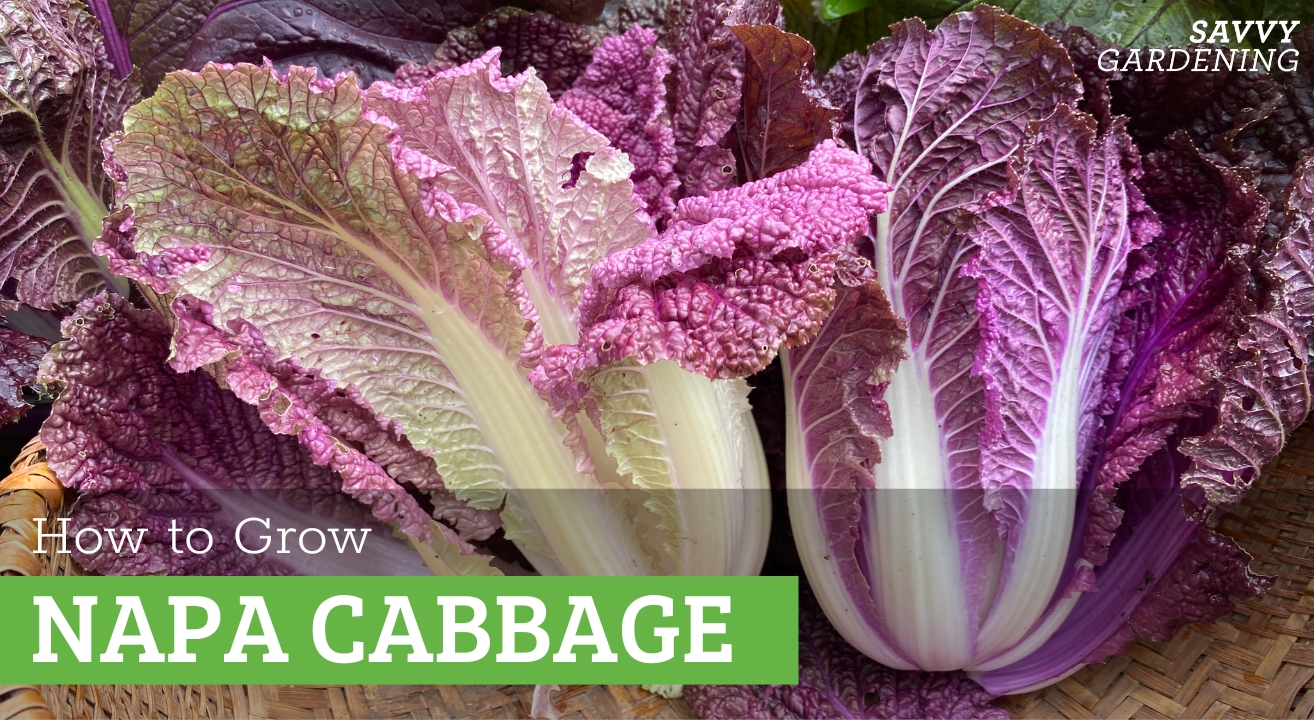
Napa cabbage, also called Chinese cabbage, is a tender, oblong-headed brassica with crinkled leaves and a mild, sweet flavor. Unlike round-headed types of cabbages, it forms an upright, barrel-shaped head that matures slowly in cool conditions. In my own raised-bed vegetable garden, growing napa cabbage has become a yearly ritual, especially because I cannot resist the purple-leaved varieties. They bring the same crisp texture to the kitchen, but they look really special tucked between rows of lettuce, kale, and bok choy. This year, I grew two different purple-leaved varieties (Scarlette and Merlot) in a raised bed with basil, marigolds, and peppers. It was just beautiful! Favorite green varieties include Bilko and Emiko.

Why grow napa cabbage
For home gardeners, growing napa cabbage is rewarding because it is productive and wonderfully versatile. A single head can turn into salads, wraps, ferments, and quick weeknight meals. The texture sits somewhere between lettuce and regular cabbage: crisp enough to be crunchy but tender enough to wilt beautifully in a pan without going completely limp. In my twelve large raised beds, I appreciate crops that are more than a one-trick pony, and napa cabbage is certainly that. Plus, if you enjoy growing broccoli or other brassicas, this crop fits naturally into the same seasonal succession planting plan.

Required growing conditions
Success with growing napa cabbage starts with cool, but steady weather conditions. Give plants full sun in spring and fall, or a little afternoon shade if your summers arrive early. The soil should be rich, loose, and moisture-retentive, with plenty of finished compost worked in before planting. Like other leafy greens, napa cabbage needs consistent moisture and available nutrients to form dense heads. It does best in cool weather and tolerates some cold weather, but both exceedingly cold and exceedingly hot temperatures will trigger bolting or loose heads (more on this in a later section). Good spacing also matters because crowded cabbage plants are more prone to pests and diseases.

How and when to plant napa cabbage seeds
You can sow seeds indoors or outdoors, but timing is everything. Indoors, start seeds about 6 to 8 weeks before transplanting, using sterile seed-starting mix (here’s the DIY seed starting mix I use) in trays or cell packs. For spring crops, count back from your last frost date. Plant the seeds indoors under grow lights 6 to 8 weeks before that date. For fall crops, start seeds in early to late summer (June or July), depending on your first frost date. Growing napa cabbage in fall is often easier because days shorten as heads form, which reduces bolting (aka going to flower). If you garden in a warmer climate that doesn’t have freezing winters, fall and winter plantings are usually the best time to grow napa cabbage.
If you’re in zones 6-9, it’s also possible for you to direct seed napa cabbage outdoors by planting seeds straight into the spring garden when the soil is workable, but temperatures are still cool. I’ve tried direct seeding napa cabbage into my Pennsylvania garden, and never have as much luck as I do when I start the seeds indoors in late winter.

Say no to frosts
Here is one important place where growing napa cabbage is not quite the same as growing traditional cabbage. While many standard round cabbages shrug off a light spring frost, napa cabbage can respond to a late cold snap by not forming a head at all. If exposed to chilly conditions, especially followed by warm days, the plants will likely bolt or form loose, disappointing heads instead of the tight barrels you want.
For spring plantings, I wait until the danger of frost has passed before planting my transplants out into my raised beds. If the forecast turns chilly after planting, protect the crop with hoop tunnels and frost cloth or plastic, then remove the cover once temperatures settle.

Transplanting tips
Move young plants outdoors after hardening them off for several days (here’s how). I like transplanting seedlings during a cloudy evening, then I water deeply to settle the soil around the roots. Plant napa cabbage seedlings to the same depth they grew in their seeding flats, spacing them about 16 to 18 inches apart in the garden. Try not to let the seedlings become pot-bound. If they sit too long in small containers, they may bolt once transplanted. A thin mulch helps keep roots cool, conserves moisture, and slows weed growth, but avoid straw mulch as it can encourage slugs to move in.

Getting the timing right
Timing is the trickiest part of growing napa cabbage. The crop prefers cool weather, but it can’t be exposed to frosts or it won’t head up; and in hot conditions, it may bolt. Look for heat-tolerant varieties to lessen the risk. It’s kind of a Goldilocks veggie, if I’m honest, but when you get it right, it is well worth it!
In spring, plant early enough that heads mature before hot weather, protecting them from nighttime frosts if necessary. In fall, count backward from your expected first frost and give the plants 60 to 80 days to mature, depending on variety. I often stagger a few sowings so one weird heat wave doesn’t ruin everything.

How often to water napa cabbage plants
Keep the soil evenly moist from germination through heading. During mild weather, an inch of water per week is a good starting point, but raised beds dry quickly, so I check my soil using a finger rather than consulting the calendar. During dry spells, water deeply and more often. Uneven watering can cause bitterness or loose heads. Extreme dry conditions can encourage bolting.
Mulch is a silent garden helper when growing napa cabbage because it keeps moisture steady and reduces splashing on the lower leaves. A small hoe is useful early on for managing weeds but cultivate shallowly so you don’t disturb the roots.

Fertilizing
Napa cabbage is a hungry crop, but it does not need heavy fertilization if the bed is well prepared. I start with compost, then add a granular organic fertilizer at planting time. Once the plants begin active leaf growth, diluted fish emulsion helps them size up. Avoid overdoing nitrogen late in the season, though, because too much lush growth can delay good head formation.

Troubleshooting
The most common problems for Chinese cabbage are bolting, loose heads, and insect damage. Flea beetles can dot leaves with small holes, while cabbageworm caterpillars and slugs chew ragged edges or hide in leaf folds. In my garden, slugs are the primary culprit when I find holey leaves, though sometimes earwigs find my plants, too. Floating row covers are my favorite defense, especially over new plantings, though I also use iron phosphate-based slug pellets if things get really bad.
Remove any damaged outer leaves at harvest time, but don’t panic over plants that are a little less than perfect. When growing napa cabbage, it’s important to watch for pests early and rotate them with other brassica crops to keep pest pressure from building up.

When to harvest the heads
The harvest window arrives when your Chinese cabbage heads feel firm and full. They are surprisingly heavy when they are mature. Depending on the variety and season of growth, harvest is usually about 50 to 80 days after sowing.

To harvest, cut the head at soil level with a sharp knife, then peel away any damaged outter leaves. I prefer to harvest in the morning, when the leaves are crisp and well hydrated.
If frost is in the forecast, mature heads can handle a little chill, but don’t leave them to freeze solid. Once the head tightens, don’t wait too long to harvest.

Using your harvest in the kitchen
This is where the fun starts. Fresh napa cabbage is excellent shredded into salads and slaws (I love a good ramen noodle/napa cabbage salad!), simmered in soup, or tossed into a hot pan for stir-frying. It is the classic choice for making kimchi, and while it is different from the firm round cabbages often used for sauerkraut, it ferments beautifully in its own way. Growing napa cabbage gives you so many options in the kitchen! I especially love slicing red-leaved heads thinly because they make even simple rice bowls look so pretty.

Happy napa
Growing napa cabbage is all about good timing, regular care, and pest prevention. Once you find the planting window that works in your garden, it becomes one of the most satisfying brassicas to grow. Whether you are filling a raised bed, experimenting with red-leaved varieties, trying your hand at making ferments at home, or trying to grow your own napa cabbage for the very first time, this crop will soon become a family favorite. I know it has at my house.
Looking for more great brassicas to grow? Check these out:

Leave a Reply