
This post may contain affiliate links. If you make a purchase through links on our site, we may earn a commission.
Did you know that winter is the best time to start your garden? No really! Winter sowing is an effective technique for starting many types of perennial, annual, biennial, vegetable, and herb seeds. Plus, it’s super easy to do. In this article I’ll share more than 40 of the best plants for winter sowing as well as expert tips on timing, planting, and growing to ensure your success.

What is winter sowing
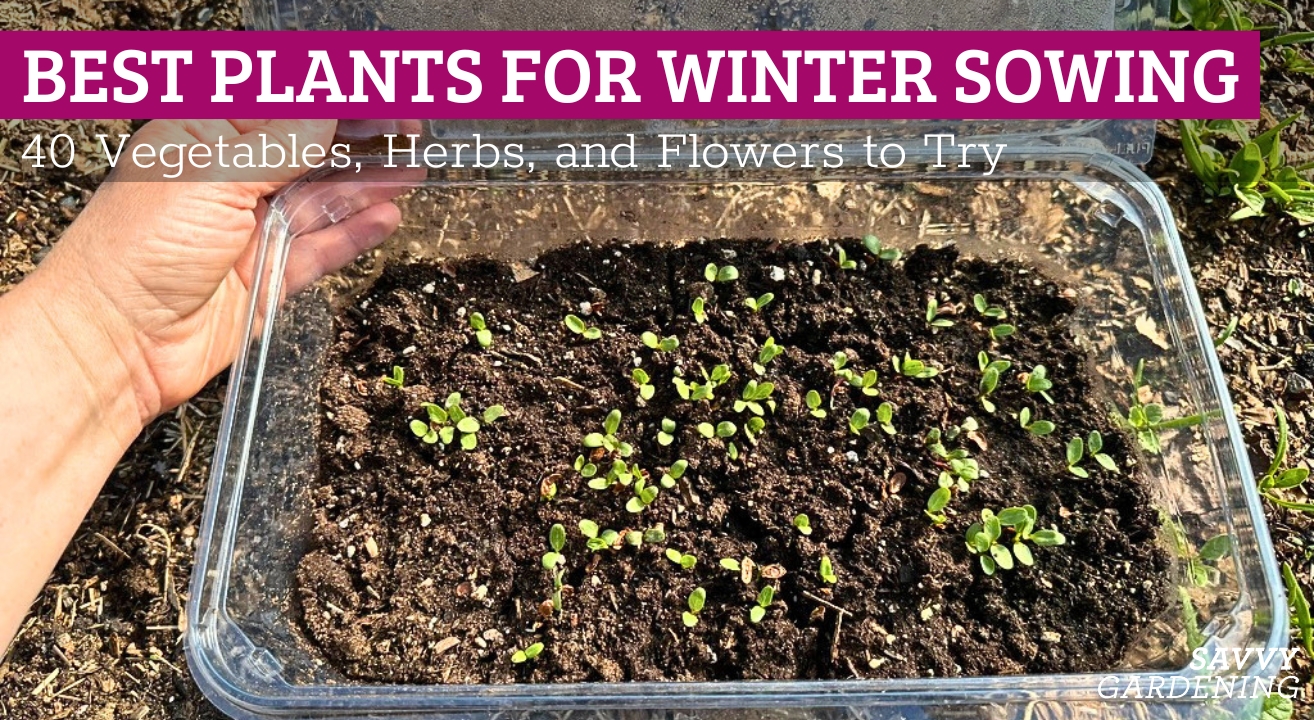
Winter sowing is an easy, low-cost method for starting garden seeds. It requires no indoor space or grow lights, no hardening off, and lets seeds naturally experience cold stratification to break dormancy. Many seeds, like native perennials, require a period of cold temperatures paired with moist soil to sprout. Winter sowing provides the ideal conditions for germination. By late winter the longer days and warming temperatures means you’ll soon spot emerging seedlings.
Milk jugs are a popular container for winter sowing, but you can also use water bottles, soda bottles, clear plastic salad containers, or large freezer bags. The container acts as a mini-greenhouse. Keep in mind that they must be large enough to hold several inches of potting soil as well as have head space for the seedlings to grow. To learn more about the best winter sowing containers, how to prep them for planting, and a step-by-step guide to planting, read our Winter Sowing Guide.

Best time to winter sow seeds
As the name implies, winter sowing is best done during the cold months. I start to gather supplies in early autumn – milk jugs, salad containers, potting soil, and seeds – but I don’t plant until the weather is right. In most regions, December through February is the season for winter sowing. Most flower and vegetable seeds need several months of cold, damp conditions to break seed dormancy and prompt germination. This happens over the winter months and then you’ll see green in early spring when the days get longer and the temperatures begin to warm.
Best plants for winter sowing
There is such a wide range of plants you can winter sow. These include perennials, like coneflowers and milkweed, as well as annual and biennial flowers, like calendula and snapdragons, and even certain vegetables and herbs, like cabbage and onions. Below I deep dive into the best plants for winter sowing to help you grow your best garden yet!

Best flowers to winter sow: Annuals and biennials
These hardy annuals and biennials are good choices for winter sowing as they’re tolerant of cold temperatures.
- Calendula – Calendula, or pot marigold, is a cool-season annual. The plants grow about 18 inches tall, flowering non-stop from early summer through late autumn.
- Cornflowers – Also called bachelor’s buttons, this old-fashioned annual bears 1 to 1 1/2 inch diameter flowers on 18 inch to 30 inch tall plants. Expect blossoms in bold shades of blue, maroon, pink, and white.
- Love in a mist/Nigella – This unique annual offers several stages of interest. First, there are the dainty blue, pink, or white flowers held above delicate ferny foliage. After fading, the blooms form balloon-like seed pods with bold red stripes. Use them to add color to everlasting arrangements.

- Pansies/Violas – Every year I winter sow pansy seeds so I’ll have plenty of seedlings to transplant into my vegetable beds. The flowers grow 1 to 3 inches across with cheerful ‘faces’ in countless colors, combinations, and patterns.
- Cosmos – Easy and reliable, cosmos flowers add months of color to garden beds. The blooms may be single or doubled, but I recommend single-flowering varieties if you want to encourage pollinators.
- Snapdragon – Snapdragons are a classic bedding plant and cut flower with spires of tubular blossoms. The incredible color range includes pinks, purples, burgundy, peach, ivory, yellows, and oranges. The seeds respond well to stratification making snapdragons ideal for winter sowing.
Other flower seeds to winter sow: larkspur, sweet peas, hollyhocks, bells of Ireland, verbena, and sweet William.

Perennial seeds for winter sowing
Many perennial plants, including native species, germinate best when given a period of cold, wet weather. Winter sowing is an easy way to stratify the seeds to ensure lots of seedlings.
- Milkweed – Milkweeds are among the best plants for winter sowing. I generally winter sow swamp milkweed and butterfly weed resulting in dozens of seedlings for my garden. Gardeners know milkweed is important as it’s the larval host plant for monarch butterflies, but these hardy perennials also make gorgeous garden plants.
- Coneflower – Like many other perennials, coneflowers need cold stratification to break seed dormancy. For this reason, it’s a great choice for winter sowing. I’ve used this seed-starting method for purple coneflower, pale purple coneflower, and yellow coneflower.

- Black-eyed Susan – Black-eyed Susan seeds need light to germinate. When winter sowing, press the tiny seeds into the soil surface; don’t bury them deeply. There are lots of species to try including Rudbeckia triloba, R. hirtia, and R. fulgida.
- Columbine – Looking for a carefree early blooming perennial? Plant columbine! This plant grows about two feet tall with nectar-rich, often spurred flowers. The color range is huge. My top pick is the native species, Canada columbine, but all columbines can be winter sown.
- Shasta daisy – Daisies are classic perennials whose blooms have white petals and sunny yellow centers. They’re cheerful, long-flowering, and attract pollinators. I have the best success with germinating the seeds when I fall plant or winter sow them.
Also try winter sowing poppies, lupin, delphinum, bee balm, and yarrow.

Vegetables to winter sow
As with flowers, the best herbs and vegetables to winter sow are those that thrive in cool temperatures. We’re not talking tomatoes, but rather crops like kale, onions, and broccoli.
- Cabbage, broccoli, cauliflower, and kale – These Brassicas are in the same plant family and have similar growing needs. Sow the small rounded seeds just a scant quarter inch deep in your winter sowing containers. Expect them to germinate in early spring when the days are longer and temperatures begin to rise.
- Onions, leeks, and scallions – These three popular vegetables are also related and respond well to winter sowing. In fact, onions were the first crop I ever tried winter sowing and by spring I had a milk jug full of heathy seedlings. Try to space the seeds a half inch apart in the jugs or containers.

- Lettuce – Tender lettuce leaves form the base of many mouthwatering salads and there hundreds of varieties you can grow with an assortment of foliage textures and colors. I like to start cold hardy types like Winter Density, Rouge d’Hiver, and Green Oakleaf. When winter sowing, scatter the tiny seeds on the surface of the soil, topping them with a thin sprinkle of potting mix.
- Swiss chard – Among the prettiest greens to grow, Swiss chard is a cool season green with large leaves and crunchy stalks. Depending on the variety, the plants can have stems in brilliant shades of red, orange, gold, and pink, as well as classic white.
Also winter sow arugula, Asian greens (mustards, boy choy, etc.), and beets.

Herbs to winter sow
Homegrown herbs add so much flavor to our food as well as attract beneficial insects and pollinators. Try winter sowing these delicious herbs:
- Parsley – The seeds of both curly and flat-leaved parsley germinate well when winter sown. We use a lot of parsley in the kitchen, so I aim for at least a dozen total plants.
- Cilantro – Pungent cilantro is notoriously short-lived when the spring weather warms up, but the key is to succession plant more seeds – often! My first crop comes from winter sown seeds. Then I follow these up every 3 to 4 weeks by direct seeding in our garden beds.
- Chives – Like its onion cousins, chive seeds sprout easily when winter sown. Come spring, your containers will be full of the grassy, onion-flavored shoots. Transplant the seedlings into a sunny spot and because they’re hardy to USDA zone 3, they’ll likely be around for many years.
Other herbs to winter sow include garlic chives, dill, chamomile, and borage. I have had luck germinating the seeds when I winter sow woody herbs like oregano, but I find I get better bigger plants when I start the seeds indoors under grow lights.

Best plants for winter sowing: Expert tips
- After winter sowing your seeds, make sure to label the containers. I use a waterproof marker to write the type of plant and date seeded on the top and bottom of the jug or container. This ensures the winter weather won’t wash away the information.
- Place the containers outdoors in a spot sheltered from strong winds and where they will receive a few hours of sunlight each day, ideally morning sun. If the site is windy, use garden twine or string to tie the containers together as this prevents them from falling over.
- Starting in March, check the containers weekly for any signs of germination. When you see green sprouts, you need to be extra vigilant monitoring soil moisture to ensure the seedlings don’t dry out. At this time, move the containers into a site with full sun. Open the lids on sunny days to ensure good ventilation.

Leave a Reply