
This post may contain affiliate links. If you make a purchase through links on our site, we may earn a commission.
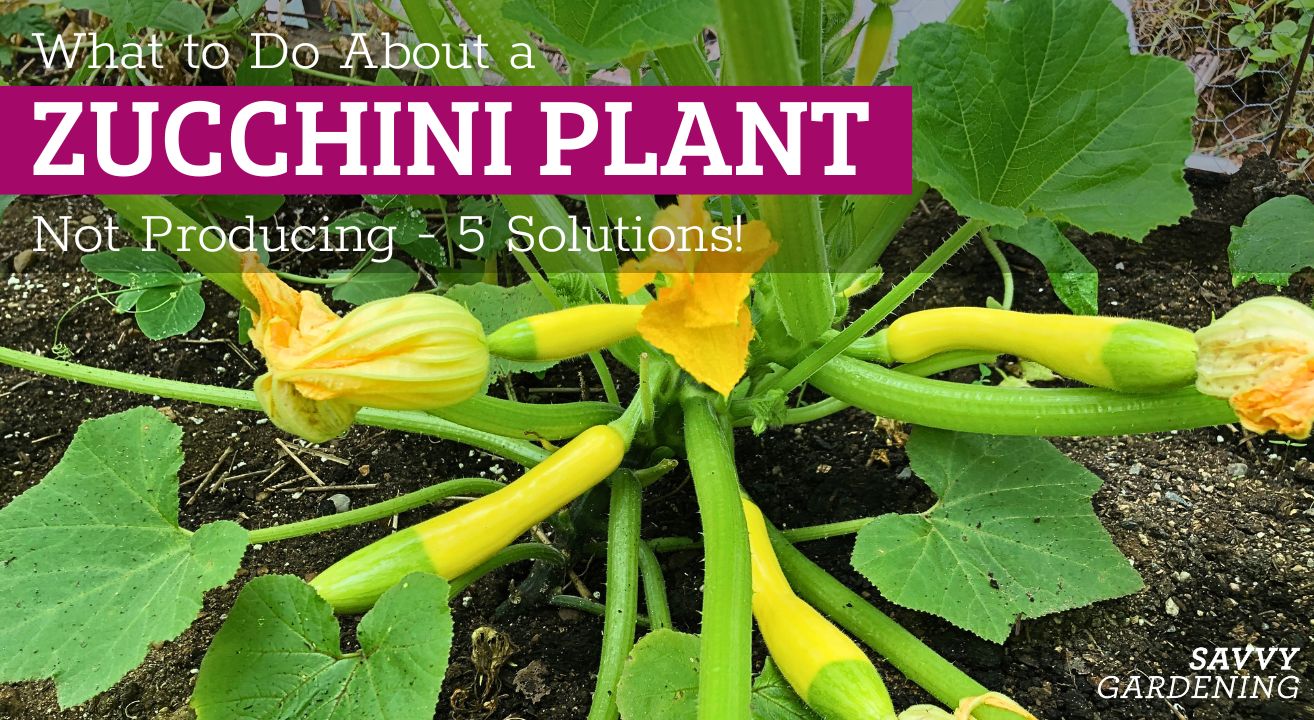
Zucchini is one of the easiest vegetables to grow, and the plants are well-known for their productivity and how quickly the tiny fruits grow into giant zucchinis. Because of their generous yield, I usually recommend only one plant per household. Occasionally, however, you might run into a problem and a very common issue is a zucchini plant not producing. The plant has tones of flowers but none turn into fruits. In this article I’ll explain why zucchini plants sometimes struggle and tell you how to fix it.

Why grow zucchini?
As mentioned above, for a family that eats zucchini once or twice a week, you’ll be fine growing one or two zucchini plants. That said, I often have trouble following my own advice as there is such a wide assortment of varieties available from seed catalogs and I want to grow them all! Fruit colors include shades of gold, white, deep green, medium green, and light green, with some having stripes, streaks, or speckles. As for fruit shapes, there are the standard oblong zucchini, as well as those with curved, round, scalloped, or squat fruits. No matter the color or shape, expect homegrown zucchini to be tender and the plants prolific. Some of my go-to varieties include Zephyr, Costata Romanesco, Magda, Lemon, Eight Ball, and Black Beauty.
Most zucchini plants are fast-growing, bush-type plants and form a dense mound of leaves, flowers, and fruits. There are a few exceptions which have vining plants. Incredible Escalator is a climbing zucchini variety that is perfect for a trellis. Yet even bush zucchini plants can be trained to take up less space in the garden if the central stem is tied to a stake and they’re grown vertically.

If your zucchini plant isn’t producing, watch this video for expert tips:
Zucchini plant not producing? 5 common reasons
1) Lack of pollination (the MOST common reason for a zucchini plant not producing)
Got a zucchini plant not producing? The most likely reason is poor pollination. Squash plants, as well as related crops like cucumbers, pumpkins, and melons, produce separate male and female flowers. In order for fruit to form, pollen must be transferred from a female flower to a male flower. This is done by pollinating insects like bees. Male flowers have a straight stem under the bloom while female flowers have a tiny fruit.
I plant zucchini companion plants, like nasturtiums, zinnias, and sweet alyssum in and around my zucchini patch. This helps lure pollinators to my garden – and more specifically, to my zucchini flowers. Even with pollinating insects, sometimes only partial pollination occurs and the result is stunted or misshapen fruits as in the below photo.
If you don’t have lots of bees in your garden, you can hand pollinate squash flowers to boost yield. It’s quick, easy, and effective! The best time to hand pollinate zucchini plants is in the morning when the flowers have just opened and the pollen is fresh.
You’ve got several options for hand pollination; use a q-tip, small dry paintbrush, or even your finger to transfer pollen from a female to male flower. Or, pick a male flower, remove the petals, and gently touch the pollen-coated male anther to the stigma in the female flower. Repeat whenever new female flowers form.

2) Wet weather or improper watering
Zucchini plants need a consistent supply of moisture for healthy growth and good flower production. Drought stressed plants produce few, if any flowers. If the weather has been dry, I deep water my zucchini twice a week, aiming the flow of water to the base of the plants. Try not to wet the flowers, especially if you’re watering in the morning when the pollen quality is high.
My watering tool of choice is a long-handled watering wand and I place the nozzle at the bottom of the plant. This further reduces the risk of water splashing on the flowers and affecting pollen quality. It’s helpful to mulch zucchini plants with 2 to 3 inches of straw to hold soil moisture and reduce weed growth.
A period of rainy weather can also impact pollination. Damp weather washes pollen from the flowers, decreasing pollination. There’s not much you can do in this case, but be patient and wait for the weather to improve and new flowers to form.

3) Humid weather
As with rainy weather, high humidity affects the quality of pollen. Moisture causes pollen to clump together and that makes it harder for pollination to occur. In summer stretches of hot, humid weather, I hand pollinate in the morning when the pollen is fresh and of the best quality. This quick task means plenty of zucchini fruits even when the weather isn’t ideal.
4) Poor soil
Zucchini is a fairly hands-off plant when it’s growing in the right site. And that site should have fertile soil amended with organic matter like compost or rotted manure. I top-dress or dig in one to two inches of organic matter prior to planting.
If applying fertilizer, it’s important to use the right product. Those high in nitrogen promote leafy growth at the expense of flower and fruit development and should be avoided in the zucchini patch. I use a balanced organic vegetable fertilizer for the best results. This is typically the same product I use on my peppers and tomatoes.
If you don’t have a lot of space or garden on a deck or patio, you can also grow zucchini in pots. I like to plant them in fabric pots filled with a blend of potting soil and compost.

5) Not enough sun
Summer squash is a warm season vegetable that needs warm temperatures and at least 6 to 8 hours of direct sun daily. With proper light the plants grow vigorously and produce lots of tender fruits. Too little sun means few flowers and few fruits. If you struggle to find a garden bed with enough sun, try growing zucchini in pots in a well lit area of your yard, deck, or patio.
Still have a zucchini plant not producing?
The last thought on a zucchini plant not producing is that perhaps it’s just not mature enough. Most varieties begin to fruit between 50 and 60 days from seeding. If your plants haven’t reached the days to maturity listed on the seed packet, be patient. They’ll get there and pretty soon you’ll be searching for recipes to use up your surplus zucchini!
Read more about common zucchini issues, like squash bugs, blossom end rot, and powdery mildew, in our Guide to Zucchini Growing Problems.
For additional expert advice on growing squash family plants, read these articles:

Leave a Reply