
This post may contain affiliate links. If you make a purchase through links on our site, we may earn a commission.
Do you have a tomatillo plant not producing? Are you just getting empty husks, but no delicious fruits? This popular garden vegetable is easy to grow and doesn’t require much maintenance, but to get a good harvest, there are a few things to keep in mind. In this article I’ll share the five most common reasons for a tomatillo plant to not produce fruits and give you easy solutions for fixing them.

What is a tomatillo?
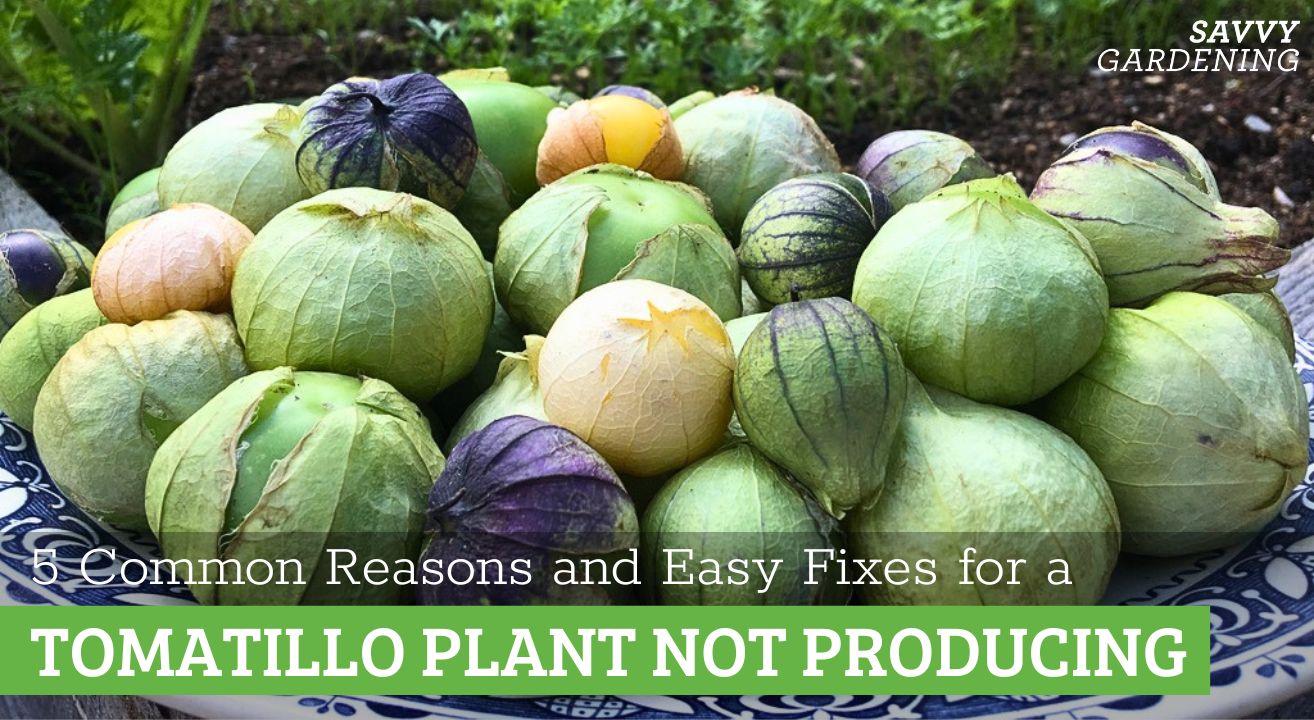
Tomatillos, which are related to tomatoes and peppers, grow 3 to 4 feet tall and produce tangy, slightly citrusy fruits that form in papery husks. You can grow a rainbow of tomatillos in your garden, as, depending on the variety, the plants produce green fruits, purple fruits, or yellow fruits.
Because I live in a short season climate, I try to grow early maturing varieties like Toma Verde, De Milpa, and Queen of Malinaclo. We love to use our tomatillo harvest to make homemade salsa verde, but these versatile vegetables are also delicious in soups, salads, and many other dishes.

Tomatillo plant not producing? 5 common reasons and solutions
While tomatillo plants are considered vigorous and productive plants, if their ideal growing conditions are not met, few fruits may form. The expert advice below will help you avoid the issue of a tomatillo plant not producing.
Reason 1 for a tomatillo plant not producing: You’re only growing one plant
Tomatillo cousins like tomatoes and peppers are self-fertile and you can happily grow a single plant and get plenty of fruits. Tomatillo flowers are self-incompatible which means you need to grow at least two separate plants for cross pollination to occur. These can be two plants of the same variety or different varieties. I typically plant my tomatillos in blocks of 4 to 6 plants to boost cross pollination and prevent pollination problems.
If growing tomatillos in containers, group the containers together or use large planters that can accommodate at least two plants. You can use plastic pots or fabric planters.

Reason 2 for a tomatillo plant not producing: No pollinators means no fertilization
Tomatillo pollen is spread from plant to plant and flower to flower by bees and other pollinating insects. If you’re having issues with a tomatillo plant not producing, perhaps it is due to a lack of pollinators. When my tomatillo plants are in full bloom in my garden, they practically buzz with honeybees and bumblebees. And to entice as many of these important pollinators as possible, I plant bee-friendly flowers around my tomatillo plants in spring. Good options include nasturtiums, zinnias, cosmos, and calendula.
Another option to increase fruit production is to hand pollinate tomatillo flowers using a small paint brush. It should be clean and dry. To hand pollinate, gently dab the paint brush into the middle of a flower on one plant and transfer the pollen to flowers on another plant. Repeat with all the flowers on the plants weekly if you’re not seeing many pollinators.
Reason 3 for a tomatillo plant not producing: High temperatures
Like their tomato and pepper cousins, tomatillos are sensitive to extremely high temperatures. When the daytime temperature is over 90 degrees Fahrenheit (32 degrees Celsius), pollen quality declines and the plant may even drop flowers. The ideal temperature range is between 75 and 90 degrees Fahrenheit (24 to 32 degrees Celsius).
It’s hard to control Mother Nature, but during periods of extreme temperatures, float a length of row cover or shade cloth overtop the tomatillo plants to create some shade. This reduces the temperature around the plants and helps prevent pollination problems. A 30 to 40% shade cloth is ideal.

Reason 4 for a tomatillo plant not producing: Excessive nitrogen
Tomatillos appreciate well-draining, fertile soil that’s lightweight, not heavy. I grow mine in raised beds to provide the optimal soil conditions. And when I plant, I amend the bed with an inch or two of organic matter like compost or aged manure. I also apply a slow release organic tomato fertilizer to the planting hole as I set my transplants. However, if you’re using manure that’s on the fresh side or the wrong type of fertilizer, your tomatillos might be getting too much nitrogen.
This is a problem because high nitrogen levels affect fruit set. They encourage plenty of lush, leafy growth, but few flowers and fruits. Therefore, it’s best to use well-composted manure and balanced fertilizers that include not just nitrogen, but also phosphorus and potassium
Reason 5 for a tomatillo plant not producing: Not enough sun
For the highest yields, tomatillo plants need to be grown in full sun. In shade or part shade, they’ll struggle to survive and won’t yield well, if at all. Look for a site that provides at least 8 to 10 hours of direct sun daily. If your vegetable garden gets less light, try planting tomatillos in containers on a sunny deck, patio, or even driveway.

More tips on growing tomatillos
Now that I’ve talked about some of the more common issues for a tomatillo plant not producing, here are a few expert growing tips to help you get your best harvest ever!
- Watering – Proper irrigation gives your tomatillo plants the right amount of water at the right time. Your watering schedule does depend on the weather, but generally, they grow best when watered deeply, but infrequently. I deep water my plants once or twice a week using a long-handled watering wand, directing the flow of water to the base of the plant. Mulching with straw or shredded leaves helps the soil retain moisture, reducing the frequency of watering.
- Row covers – Early in the growing season, just after I transplant my seedlings, I like to cover the tomatillo bed with a length of lightweight row cover. I float the row cover on wire hoops. This creates a microclimate around the plants, protecting them from cool temperatures. Don’t plant too early in spring. Wait until the risk of frost has passed and the day temperatures are reliably above 60 degrees Fahrenheit (15 degrees Celsius) and night temperatures above 50 degrees Fahrenheit (10 degrees Celicus). Row covers also protect seedlings from pests like flea beetles.
- Staking – I insert a sturdy tomato cage or a stake at planting time. As the tomatillo plants grow, I tie new growth to the stake every week or two. This keeps the plants upright and prevents damage, which is common when the branches are heavy with ripening fruits.


Leave a Reply