
This post may contain affiliate links. If you make a purchase through links on our site, we may earn a commission.
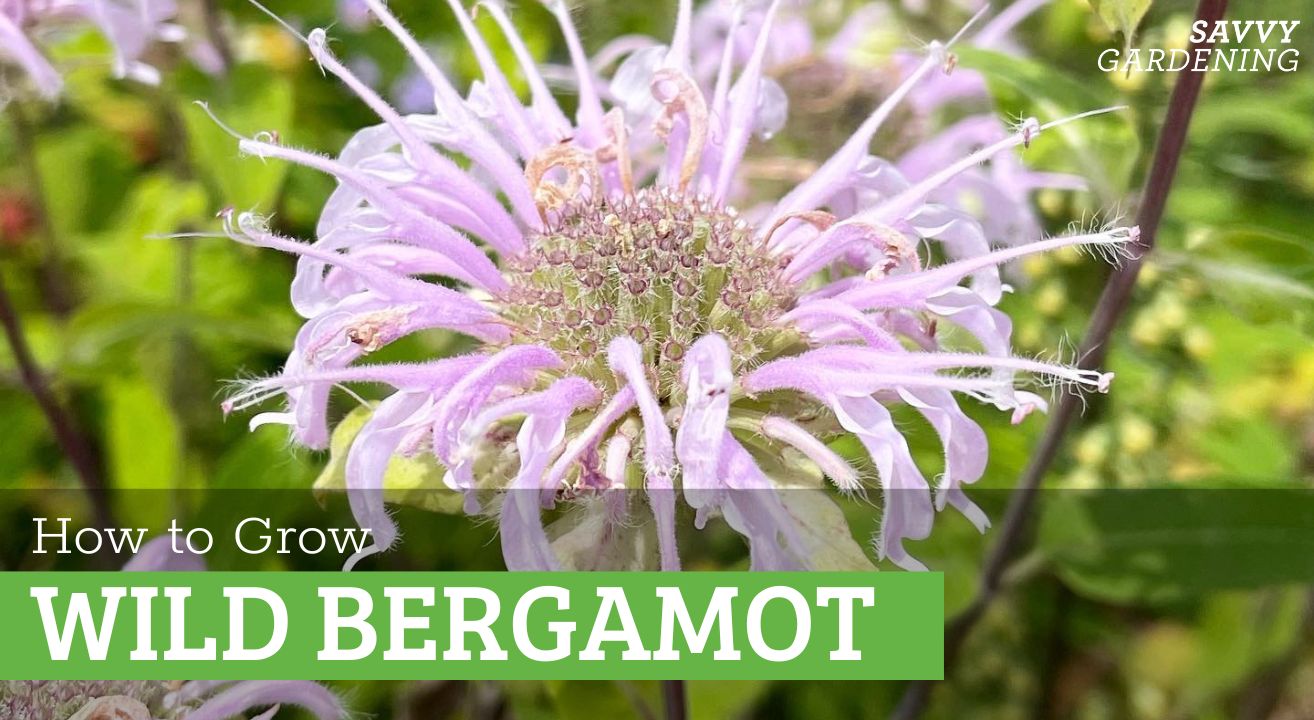
There comes a point mid-summer where the edges of my local bike paths and rail trails are awash in mauve. Wild bergamot is in bloom and lilac-colored clouds mingle with other wildflowers. I grow it in my garden, too, because I love the unique, starburst-like blooms. Those tubular flowers are magnets for valuable pollinators. In this article, I’ll share more reasons to add this easy-to-grow native perennial to your garden.
Wild bergamot (Monarda fistulosa) is also called wild bee balm, not to be confused with spotted bee balm, or its cultivated cousin Monarda didyma that is commonly called bee balm. All are members of the widespread mint family with their square stems. This hardy perennial is native to most of North America—from southern Canada east of the Rockies (and minus the maritime provinces), through much of the United States, and into northeastern Mexico.

Why grow wild bergamot?
Wild bee balm has that blowsy, carefree look that is a signature of cottage gardens. It blooms for a long time in the summer, so I don’t mind that the patch in my garden is slowly expanding. Mauve is the color I see in the wild, but flowers can also be white or pink. Here are some reasons to plant wild bee balm:
- It attracts a wide range of pollinators, including bees, wasps, butterflies, hawk moths, hummingbirds, and hummingbird moths. The Xerces Society considers it to be a valuable monarch nectar plant.
- It is very hardy in cold climates: -30°F to -20°F (-34.4°C to -28.9°C).
- The plant is deer resistant.
- It will tolerate a variety of growing conditions (as mentioned below), from prairies and meadows to fields and ditches.
- The flowers and foliage are edible.

Where can you grow it?
Wild bergamot will grow anywhere, from dry meadows to wet ditches—it’s not a fussy plant. Those aforementioned trails I mentioned are mostly sunny and dry areas. The front yard garden where mine blooms is hot, sunny, and dry, and the soil isn’t the greatest.
That being said, I always recommend amending the soil in the garden where you’re going to plant. Work in a bit of fresh compost before you sow seeds or dig in a seedling. Choose a spot that gets part shade to full sun. Plants can reach up to four feet tall, so be sure to plant your wild bergamot strategically, so it doesn’t conceal other perennials in the garden, once it matures.

How to grow wild bergamot from seed
There are a few ways you can sow wild bee balm seeds. Unlike some other plants, they do not need a period of cold stratification. Sow seeds indoors about six to eight weeks before the last frost. Scatter them on top of moistened seed-starting mix and sprinkle with a tiny bit of soil. When it’s time to water, use a mister to water lightly so that the seeds don’t wash away. You can also direct sow seeds in the garden in early spring or in the fall.
If you’ve bought plants or nurtured seedlings indoors, space them about 12 to 18 inches (30 to 46 cm) apart.

Caring for wild bergamot plants
Powdery mildew is the main affliction that can affect wild bergamot plants. When watering seedlings, try to water at the base of the plant to avoid getting the leaves wet. When planting, give plants lots of space to promote good air circulation and to avoid crowding.
Because wild bergamot grows in the wild, there is really no need to fertilize it. Deadheading will encourage more blooms, but I just let my plant do its thing. In the fall, as the seed heads dry, they will feed the birds. You can also collect them to plant in other areas of your garden.
The plants spread by rhizomes and can be divided every three years or so.

Leave a Reply