
This post may contain affiliate links. If you make a purchase through links on our site, we may earn a commission.
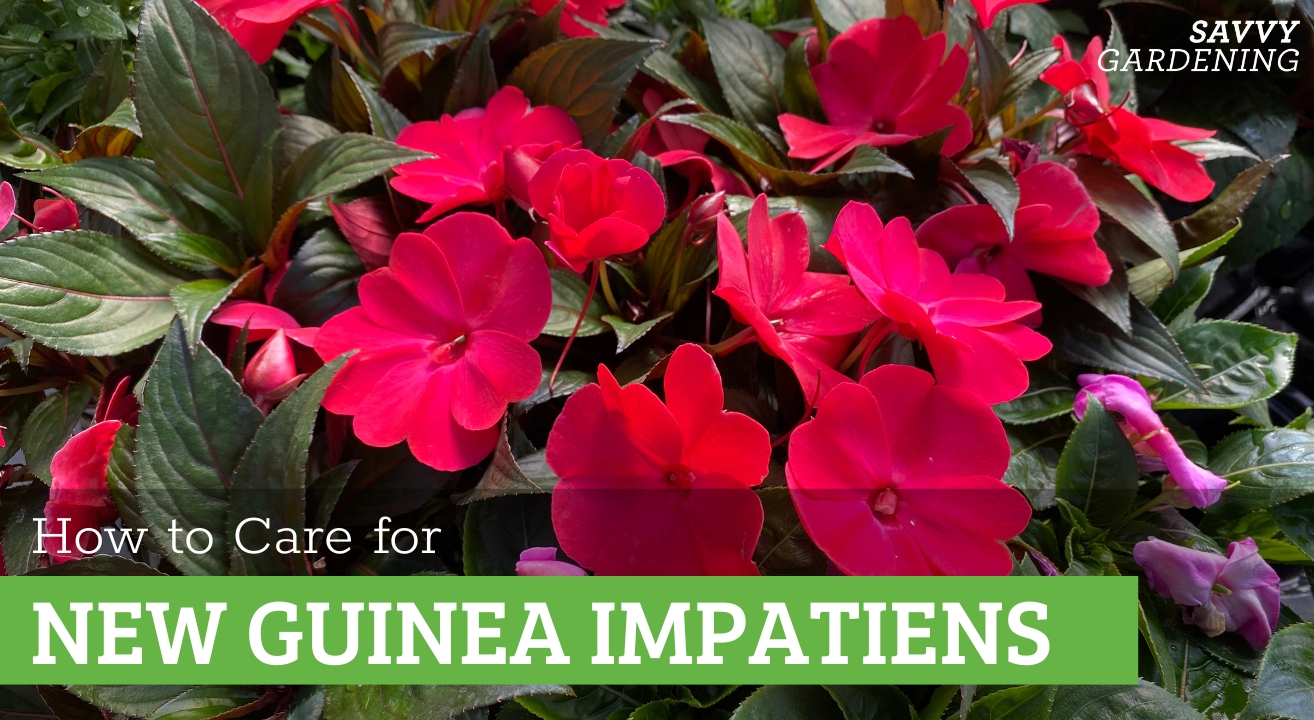
Providing the very best New Guinea impatiens care doesn’t require much time, and, if you get it right, you can expect a stunning landscape display from early spring until fall’s first frost. New Guinea impatiens produce blooms in a wide range of colors from bold carmine red to fuchsia to softer shades of salmon. They are one of my favorite annuals to grow in my many container plantings. In this article, I’ll introduce you to New Guinea impatiens and offer many tips for their care.
Although they’re certainly striking by themselves, these colorful flowers really pop against the impatiens’ cool, dark leaves. Variegated varieties have the added bonus of striking deep-green foliage striped with yellow, while bronze-foliaged varieties provide an even more dramatic backdrop to the blooms. What’s more, New Guinea impatiens are the perfect choice to mix with other dramatic foliage plants like coleus, hosta, and caladium. Because each of these share a preference for partial shade, you can arrange them together in large pots or along a shaded border.

Meet the New Guinea impatiens
On the lookout for interesting ornamental plants, U.S. Department of Agriculture researchers traveled all the way to the island of New Guinea in 1970 and brought plant material from 25 kinds of wild impatiens back with them. A handful of plant experts subsequently hybridized versions of these subtropical beauties, and, by the late 1970s, dozens of different New Guinea impatiens cultivars were available for purchase. Their unusual foliage and cheery, bright blooms soon made them one of the most popular and beloved landscaping plants in North America.

Choosing the best varieties
When shopping for New Guinea impatiens plants, be sure to look for “Impatiens hawkeri” on the plant label. Although there are some similarities between New Guinea impatiens and common impatiens (Impatiens walleriana), there are some important differences. Native to eastern Africa, common impatiens generally put out more flowers, but they’re smaller than those of New Guinea impatiens. Common impatiens are also much more susceptible to the fungal disease impatiens downy mildew (IDM). New Guinea impatiens, on the other hand, seem to be naturally resistant to IDM.
A few varieties to seek out include:
- New Guinea Magnum “Violet Star”
- New Guinea ColorPower “Pink Flame”
- New Guinea Clockwork “Orange Glow”

Why proper New Guinea impatiens care matters
First, the quality of New Guinea impatiens care you provide directly influences the quality—and number—of blooms you’ll enjoy over the growing season. Also, good New Guinea impatiens care positively affects the health and vigor of the plants overall. That means your plants will be more likely to bounce back if you happen to miss one of their regular watering sessions or if a few aphids stop in for a snack.
Ideal growing conditions
New Guinea impatiens will do best with a touch of morning or evening sun and four to six hours of afternoon shade—particularly if you live in a very hot climate. What’s their sweet spot? Daytime temperatures between 70 and 85 degrees F (about 21 to 29 degrees C) and nighttime temperatures between 55 and 65 degrees F (roughly 13 to 18 degrees C) are ideal.

Soil requirements and potting tips
New Guinea impatiens thrive in soils that are lightweight, loose, and well draining. When left in overly dry soils, these plants quickly wilt. Of course, they can have too much of a good thing, too. Impatiens situated in overly wet soils can develop root rot. For improved drainage, amend the soil in landscape beds with plenty of organic matter.
If you’ll be growing your impatiens in containers, sanitize these with a 10 percent bleach solution before planting and use a high-quality potting mix for the job.
Watering guidelines
Being conscientious about watering is especially important for good New Guinea impatiens care. The soil should feel consistently moist but not water-logged, and your plants shouldn’t be allowed to dry out. In part, the ambient temperature and your plants’ exposure to sun and wind will determine how much and how often you need to water.
The method you use to water your plants also matters. By using a drip irrigation system or a simple soaker hose, you can thoroughly water your impatiens while also keeping their leaves dry. This helps prevent the spread of harmful plant pathogens. When I water my containers with New Guinea impatiens growing in them, I aim the hose nozzle or watering can head directly at the soil, never at the foliage. Of course, I can’t keep rain off them completely, but I do my best to reduce how often the foliage gets wet.

Fertilizing advice for New Guinea impatiens
Regular fertilizing is another aspect of proper New Guinea impatiens care. Whether your plants are growing in a landscaping bed or containers, work an organic, slow-release fertilizer into the soil or potting mix before you plant your impatiens. That way, they’ll get a mild nutrient boost each time you water.

Is pruning and deadheading necessary for New Guinea impatiens care?
Pruning and deadheading aren’t absolutely necessary, but they do have a place in New Guinea impatiens care. For instance, if your established plants look leggy, you can lightly prune them to encourage more compact growth. And, while it’s true that these plants eventually will drop their own spent blooms, you may want to remove any flowers that are past their prime yourself. Not only will this keep your New Guinea impatiens looking their best, but eliminating any decomposing debris also helps reduce the spread of potentially harmful plant pathogens. I remove spent flowers from my plants every time I water them.

Common pests and diseases of New Guinea impatiens
Even if you follow all of the New Guinea impatiens care tips and tricks to the letter, you’ll still need to watch for these potential troublemakers:
- Aphids, mites, and whiteflies—Periodically check plants for signs of feeding aphids, spider mites, and similar pests. Control infestations though hand-picking or apply insecticidal soap.
- Disease—Although downy mildew mostly affects common impatiens, it is still possible for your plants to develop IDM or other fungal diseases. Keeping plant leaves dry and watering at the soil level is your best defense.
What to do at the end of the season
If you live in USDA Hardiness Zones 10 or 11, you may be able to treat your impatiens like tender perennials. Otherwise, you have some decisions to make. While some regard impatiens as disposable annuals, you might decide you want to keep yours for next season. You can either root cuttings from your best plants to pot up later or you can move entire plants inside.

Can you overwinter New Guinea impatiens?
You absolutely can overwinter New Guinea impatiens. To start, carefully dig them up (or remove them from their current container), remove the soil from around their roots, and repot them in newly sanitized pots with all new potting mix. (You should also check plants for any hitchhiker pests before bringing inside.) Place in a warm spot that gets some bright, indirect light and water just often enough to keep the soil moist. I bring in a few of my plants every fall, and they do great in my east-facing bedroom window. When warm weather returns, I gradually reintroduce them to life outdoors.

A piece of paradise
Keep a few basic guidelines in mind and proper New Guinea impatiens care isn’t tough to master. Your impatiens will perform best in consistently moist but well-drained soils. And, for healthy foliage and abundant flowers, you should provide your plants with gentle, morning sun or some evening rays and four to six hours of shade during the hottest, brightest part of the day.
Once your New Guinea impatiens are established, you’ll be rewarded with the bold contrast of flowers in hot pinks, reds, oranges, and more against a backdrop of dark, glossy leaves.
For more beautiful annuals to grow, visit these articles:

Leave a Reply