
This post may contain affiliate links. If you make a purchase through links on our site, we may earn a commission.
Like many gardeners, I grow bell peppers because I love eating stuffed peppers, fajitas, and kabobs, but also because I enjoy growing interesting plants that produce colorful fruits. Whatever you’re reason for growing bell pepers, learning how to save bell pepper seeds can take your pepper growing to the next level. In this article, I’ll cover why you should consider learning how to save bell pepper seeds, the step-by-step process for seed saving, and how to test for germination before the next garden season rolls around. You’ll also read a little about the anatomy of a pepper flower and why that makes a difference in the process of saving bell pepper seeds.

Why learn how to save bell pepper seeds
There are a few reasons why I learned how to save bell pepper seeds, and why you might want to do the same. These include:
- Saving money on seed purchases. I want to grow several different varieties of peppers, and as a result, I could end up spending a good portion of my garden budget just on buying pepper seeds. By saving my own pepper seeds, I can replant the varieties I’ve saved and add to my collection by purchasing new seeds for different varieties each year.
- Sharing seeds with friends. I enjoy sharing and swapping seeds of pepper varieties I’ve saved myself. When I do this, I’m often introduced to new pepper varieties from friends, too.
- Growing varieties adapted to my specific garden and microclimate. By selecting peppers from the healthiest, most prolific plants for seed saving, I’m continuing a genetic line that thrives in the unique conditions of my growing space.
- Advancing my garden skills. Peppers are a good seed-saving challenge because doing so requires an understanding of plant physiology and cross pollination.

Anatomy of a pepper flower
Understanding the reproductive “mechanics” of a pepper plant can help you better understand how to save bell pepper seeds. Pepper plants have “perfect” flowers, meaning both the male and female flower parts are contained in each individual blossom. Like many plants with perfect flowers (but not all of them), peppers don’t require pollinators, such as bees, for pollination to be successful (though bees do still visit the flowers and help shake the pollen loose, they aren’t required for pollination). Pepper flowers are self-pollinating, needing just a breeze or bump to help shake the blossoms and transfer the pollen from the male parts (the stamen) to the female part (the pistil). This means you can still get a great pepper harvest even if you only have one plant.
Pepper cross pollination
Even though pepper flowers are self-pollinating, cross pollination can, and does, occur. This is when pollen from another pepper variety is introduced into a flower by wind or insects, mixing the genetics of those two varieties together in the next generation (cross pollination does not affect the flavor of this year’s fruits, but it can impact the flavor and performance of the next generation grown from those saved seeds).
If you’ve planted hot peppers too close to bell peppers or sweet peppers and then saved their seeds for replanting the following season, you may have already learned this. When you replant these saved seeds the following season, your new hot peppers might not be as hot, and your bell peppers could have a slight kick.
This is also true between peppers of the same type. Two different bell pepper varieties planted nearby can mix their genetic material—whether by wind or by a visiting insect—and this means the next generation of seeds will not grow perfectly true to either of its parents. These seeds grow into new hybrid varieties; sometimes the results are great and other times the results are disappointing.
If you want to ensure your saved pepper seeds grow into the exact variety you grew this year, then you have to isolate each variety to prevent cross pollination. This can be done in a few different ways.

Space separation to prevent pepper cross pollination
One way to prevent accidental cross pollination is to isolate each different variety. Just how much space do you need to put between pepper varieties when you’re planning to save your bell pepper seeds in order to prevent cross pollination? Well, I’ve read between 5 and 50 feet, if you’re willing to accept some risk that next year’s plants might not be exactly what you grew this year.
If you are producing seed commercially or trying to preserve a valuable heirloom, you need to give ¼ mile distance between varieties. This distance is likely not reasonable for a home gardener wanting to grow more than one pepper variety. Thank goodness, putting space between pepper varieties isn’t the only way to create isolation.
Other (much easier) ways to isolate pepper varieties for seed saving
Do not be discouraged by the distance requirements for saving pepper seeds! If you can’t separate them with space, there are other ways to isolate the flowers of differing bell pepper varieties.
Consider these far easier methods:
- Secure insect netting over a single plant or several plants of the same variety. Because pepper plants don’t require insect pollination, you can keep potential “accidental pollinators” who might introduce pollen from another variety away from the blossoms and prevent them from cross pollinating. Be sure to do a thorough job in covering the plants and keep only a single variety or one individual plant under the same section of netting.
- Tie a small mesh bag—“blossom bags”—over a developing flower bud, just before it opens. The flower will open inside the bag, ensuring it self-pollinates. After the fruit begins to develop, you can remove the bag. Tag this pepper by tying a twist tie loosely around its stem so you remember which fruit to save seeds from when the time comes. Do this with at least two fruits from each variety you want to save to improve your chances of growing a perfect pepper that contains the genetic line you want to continue.
When to save pepper seeds
Peppers have a long growing season, so learning how to save bell pepper seeds takes patience. You do a lot of work up front to isolate the pepper varieties or the developing flowers from one another, and then you still have to wait until the peppers are mature before you can harvest and save the seeds. Unripe fruits do not contain viable seeds. Typically, green peppers are still immature, even though they might be the right size. Harvest the fruits for seed saving only after your pepper has reached its full size and color. Also keep watch over the weather, as you need to harvest before your first frost, which will kill the plant and the peppers on it.

Step-by-step process for saving bell pepper seeds
So far in this article, I’ve covered the hardest part of how to save bell pepper seeds: preventing cross pollination. The rest is a straightforward seed-saving exercise.
Here is the whole process, step by step:
1. Choose the right pepper varieties.
Select open-pollinated peppers, not hybrids, for seed saving. Seeds saved from hybrid varieties will never come true in the next generation.
2. Isolate your chosen pepper plants.
You can, of course, save seeds from hybrid plants and those you didn’t isolate, but you won’t know quite what you’re going to get next year.
3. Wait until the pepper matures.
For some of us, this is the hardest part.
4. Harvest mature peppers.
Wait until the fruit is extremely ripe to harvest; I wait until they are borderline starting to rot. The more mature, the better, but don’t wait so long that they start to rot or mold could affect your seeds.

5. Remove the seeds.
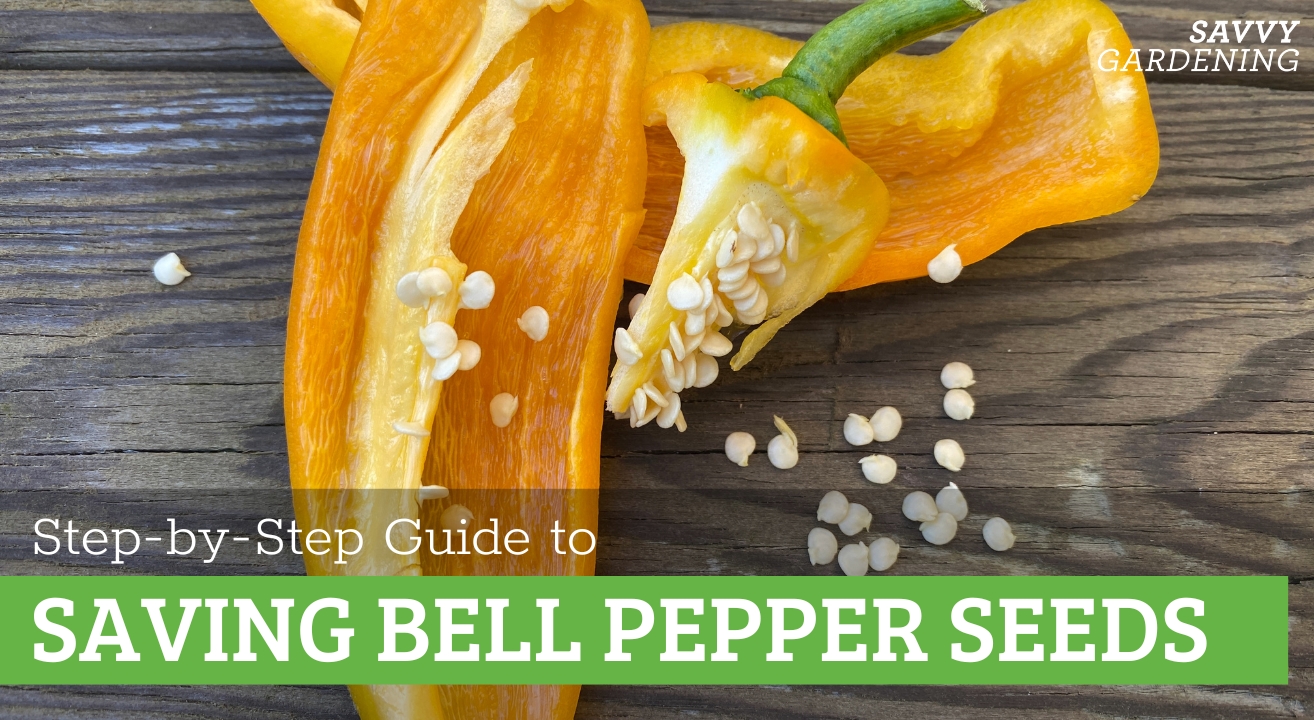
Working over a box or baking tray, tear open the pepper. Be careful that seeds don’t spring out and make a mess! Shake out the seeds or use a knife to scrape them out. If the seeds are stuck to the flesh, submerge the pepper with the seeds in a bowl of water and gently separate the seeds with your fingernails or a spoon.

6. Dry the seeds thoroughly.
Spread out the seeds on a screen or coffee filter in a place them in a location with good airflow to allow them to dry completely. I suggest using a coffee filter for this step because the seeds are less likely to stick to coffee filters than they are to paper towels. Shuffle the seeds around every few days.

7. Store the seeds.
Keep your dried seeds in an envelope or seed storage box. Label it with the variety, year, and any other information you want to remember. Keep the seeds in a cool, dry place. Proper storage will lead to higher germination rates. Tossing a packet of anti-desiccant into the envelope can help keep the seeds dry.
Test bell pepper seeds for germination
When you purchase seeds from a commercial source, you’re purchasing seeds with a known germination rate. This is usually printed on the seed packet. Before you hang all of your garden dreams on seeds you saved, do a germination test to be sure the saved seeds are viable.
There are a few ways to test for germination, but the one you might remember from science class is the paper towel method. Here are the steps for determining how well your seeds will germinate when you pull them out of storage:
- Space out 10 seeds across half of a damp paper towel.
- Fold the empty side of the paper towel over the seeds, and seal it in a plastic bag to preserve the moisture. Keep it somewhere warm (I keep mine on our front windowsill or on top of the fridge).
- In two weeks, check on your germination experiment. How many seeds have sprouted? Calculate the percentage so you can determine the viability of the remaining seeds for the next growing season.

Pepperific seed-saving skills
Learning the basics of how to save bell pepper seeds is a great opportunity to expand your self-sufficiency in the garden and your plant know-how. Saving pepper seeds takes a few more steps than saving seeds from many other plants, but the added effort is worth it—seeds are not cheap!
While the idea of needing to isolate pepper varieties from one another can be intimidating, don’t let it stop you. You might think of it as a seed saving 201 course. Whether you plant varieties on opposite sides of the garden, employ insect netting, or cover individual flowers with blossom bags, learning how to save bell pepper seeds is a process any gardener can succeed at.
Find more tips for successful pepper growing here:

Leave a Reply