
This post may contain affiliate links. If you make a purchase through links on our site, we may earn a commission.
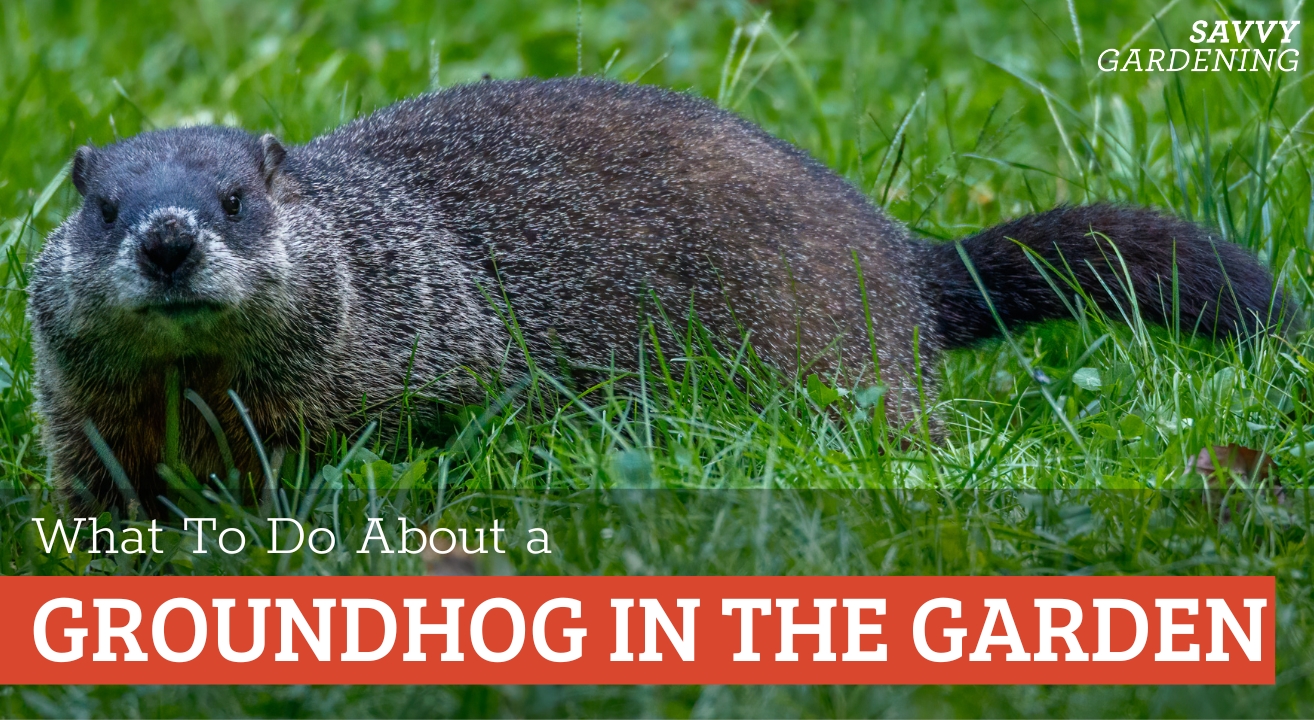
Gardeners face a lot of challenges from pests—including insects, birds, and mammals—but few animals strike as much fear in the heart of a vegetable gardener as groundhogs. I have a gardening friend who likes to say, “It is impossible to have a groundhog AND a garden. You can have one or the other, but you can’t have both.” He’s not wrong. In this article I’ll discuss some expert-approved methods regarding how to keep groundhogs out of your garden and offer plenty of other suggestions based on my experiences throughout the years.

Why groundhogs are problematic for gardeners
I’ve been a vegetable gardener for decades. I have a 7-foot-tall fence around our large vegetable garden which manages to keep the rabbits and deer out. It also sorta-kinda keeps the groundhogs out, too, unless, of course, they set their mind to it. Groundhogs, also known as woodchucks, are agile climbers and strong diggers. I once saw a groundhog sitting up in the branches of our apple tree happily munching on an apple! They can climb trees and wooden fences, but they are more likely to dig beneath a fence rather than climb it in order to access the veggies growing inside. At least one little bugger always manages to dig its way under our veggie garden fence every year, prompting a flurry of activity to find a way to keep him or her out.

Groundhogs will eat anything and everything in a garden; they are not discriminating eaters (maybe that’s why “hog” is in their name?). In my garden, they especially enjoy greens of every sort (kale is their favorite), tomatoes, zucchini, sweet potato vines, bean plants, and all the cole crops. The only thing they seem to avoid are strongly flavored herbs and hot peppers. One groundhog will eat between 1 and 1.5 pounds of vegetation every day—that’s like a human eating about a third of their body weight in every 24-hour period! Now you know why gardens and groundhogs can’t coexist, at least not without a lot of tears and frustration from the gardener.

How do you know you have a groundhog in your garden?
The signs of groundhog damage in a garden are pretty distinct. Unlike rabbits, which tend to eat vegetable plants from the bottom up, and deer, which tend to eat vegetable plants from the top down, groundhogs typically eat from one side of the plant across to the other until the entire thing is gone. They also can only reach about 14-18 inches high when standing on their hind legs. So, if the top of a tall plant is nibbled off, but the bottom is intact, it’s more likely to be a deer lunching in your garden. But, if you find half of a kale plant or half of a bean plant, or if entire plants are eaten down to the central stem, a groundhog is likely to blame.

Groundhogs are active during the day, not at night when they are sleeping in their burrows. It’s often pretty easy to catch them in the act of eating your veggies by watching your garden from a window or porch. I also have a motion-activated trail camera set up in my garden. It snaps photos whenever something moves in front of it, so if I suspect a groundhog is to blame, I’ll confirm it with photographic evidence before taking any action. Investing in a trail cam is great way to catch your culprit in the act.

More signs of groundhogs
Another item to be on the lookout for is evidence of how the groundhog was able to access your garden if you have it fenced. Walk the perimeter of the garden and examine the base of the fenceline. Groundhogs are strong diggers and will move a lot of dirt away to burrow underneath a fence. If you find the place where the groundhog has entered, use heavy rocks, bricks, or pavers to block off its future access. (More on preventing digging with a fence in a later section).
You might even spot the animal’s burrow somewhere on your property. A groundhog’s main burrow entrance hole is about 10 to 12 inches wide, often with a mound of dirt extending out of it. The are sometimes alternate entrance/exit holes that do not have a dirt mound present. Each groundhog has its own burrow; they do not live communally except for a mother raising her babies. An individual burrow contains multiple tunnels and chambers and can be as deep as 15 to 60 feet underground.

How to keep groundhogs out of your garden
If you’ve found groundhog damage in your garden or you see one nearby (I often spy groundhogs eating the clover in my lawn), it is time to take action before further damage can be done. Here are some effective ways to keep groundhogs out of your garden or to get rid of nuisance groundhogs on your property.
Method 1: How to fence a groundhog out
Since groundhogs can climb and dig, there is really only one style of fence that works perfectly to keep them out. Use 8-foot-tall welded wire metal fencing attached to 6-foot-tall metal T-posts but leave two feet of fencing at the top unattached to the stakes and bowing out away from the garden. This way, if the groundhog climbs up the fence, the top section will flop down and away from the garden, and the groundhog will drop off of it and onto the ground.
At the ground level, the fence should make an L shape with the bottom of the L facing outside the garden and extending out by about 18-24 inches. Groundhogs tend to dig right at the base of the fence. So, with this set-up, when they dig, they hit the welded wire and can’t dig any deeper.
Essentially, the ideal groundhog-deterring fence looks like a letter C with the top and bottom both curved away from the garden.
Another option is to bury the bottom of the fence 12-18 inches straight down into the ground. This prevents groundhogs and rabbits from digging beneath the fence and can be installed in an afternoon by renting a motorized walk-behind ditch digger (aka Ditch Witch trencher).

Method 2: Using a single strand of electric fencing
If you already have a fence around your garden, run a single strand of electrified wire around the outside of the fence, about 4-6 inches above the ground. You can charge it with a solar charger. Be sure to keep it free of weeds or other debris that could ground it out and prevent the charge from moving all the way through the wire.
Check with your local municipality to ensure electric fencing is legal where you live. It’s also a good idea to clearly label electric fences with signage that is highly visible and easy to read.
When we had our organic market farm, we had a neighbor who used this method and it worked like a charm to keep the groundhogs (and raccoons!) out of his corn patch.
Method 3: Destroy the groundhog’s burrow
If you can find the burrow’s entrance, it’s possible to make it uninhabitable by putting an anti-rodent gas cartridge down the burrow just after dusk and then sealing off the burrow’s entrance with a heavy rock. This will kill the groundhog in its hole. It’s not the most pleasant thing, but it’s an option that is effective. The cartridges are available from farm supply stores.
Method 4: Trapping garden groundhogs
Live traps from companies like HavaHart make it easy to trap groundhogs that have become problematic. The best baits to use are ripe cantaloupe and apple slices, though I’ve also heard of gardeners who use mini marshmallows to entice groundhogs into the trap. Others swear by broccoli or small chunks of corn on the cob. Like people, I guess each groundhog has its own favorite meal.
Traps should be set only during daylight hours to avoid catching skunks, opossums, or raccoons. Put the trap in the shade somewhere near where you’ve spied the groundhog feeding. Create a small trail of bait starting about a foot away from the trap’s opening and extending into the mouth of the trap. Then put a small pile of bait at the back of the trap, just past the trigger plate.
Here in the US, each state has regulations regarding what you can legally do with a trapped nuisance animal, so it’s important to reach out to your local Game Commission office to ask BEFORE you set the trap. Some states allow trap-and-release only on public lands while others outlaw relocating nuisance animals entirely. Some have no restrictions at all. Have a plan in place so your problem doesn’t become somebody else’s problem.

Method 5: Legally dispatching a groundhog
You might not like this option, but it is legal to shoot nuisance groundhogs in many states when the animal is actively causing economic damage (which includes damage to a home garden). If you do opt for this groundhog-control measure, please use great caution. You MUST follow all local laws regarding firearm use. Suburban and urban gardeners should never use this method as neighbors are far too close. If you are a rural gardener, it’s an option, but it can be really difficult to get the timing right and to get close enough without scaring the animal off. Plus, in many states, groundhogs are classified as game animals and anyone using this method, even on private property, must have a valid hunting license in their state.
Here in Pennsylvania, we need to have a 150-yard “safety zone” away from any occupied building or house unless you have explicit permission from the occupants. If you do shoot a groundhog or euthanize a trapped groundhog, a proper burial to a depth of 3 feet is essential, wearing proper protective gear such as rubber gloves.
Method 6: Let it be
While groundhogs can cause a lot of damage to a garden, they are native to North America and were here long before humans were. If you have a resident groundhog that isn’t causing damage to plants, there is no need to take any action at all. Just let it be. Groundhogs typically create new dens each winter and then again each spring, so just because the groundhog is around this year, doesn’t mean it will be back next season. The average groundhog lives between 2 and 3 years.

The groundhog game
While no gardener wants to play the groundhog game, sometimes managing these critters is a necessary task. Armed with the knowledge and options found in this article, I hope you’re able to win the game and protect your garden effectively.
For more information on managing various garden pests safely, please check out these articles:

Leave a Reply