
This post may contain affiliate links. If you make a purchase through links on our site, we may earn a commission.
Basil is an essential kitchen herb lending its spicy-clove taste to pasta, pesto, bruschetta, soups, sandwiches, and countless other dishes. And while basil is considered easy to grow, bolting is a common issue for gardeners. Bolting is when the plants start to flower, which diminishes the flavor and leaf texture, as well as yield. In this article you’ll learn all about bolting basil and get five strategies to slow bolting.

What is bolting basil
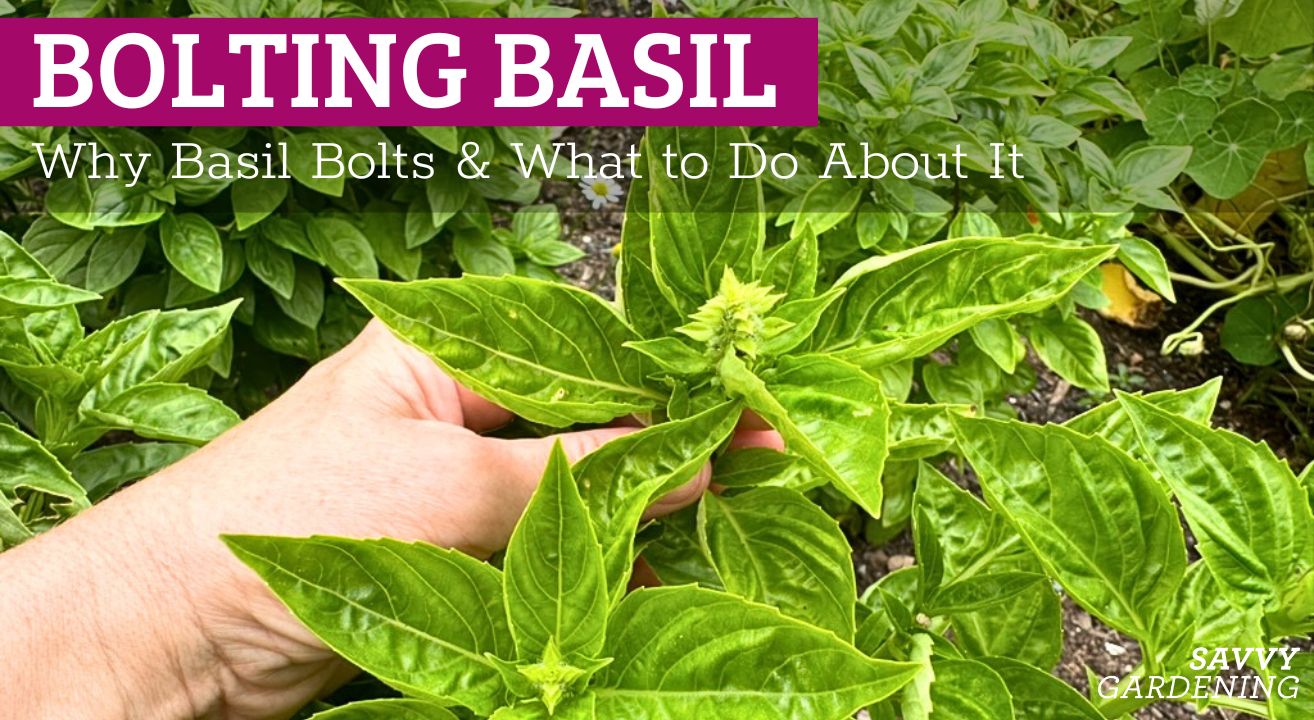
In my garden it’s impossible to grow too much basil, as the fresh leaves add delicious flavor to my summer cooking. And if I have any surplus, it’s frozen or dried for the rest of the year. Yet this warm season herb is prone to bolting which can seriously impact leaf production. Bolting is when a basil plant shifts from shoot and leaf production to producing flowers and eventually seeds. Flower stalks develop at the ends of the branches and soon pretty clusters of white or purple blossoms are held above the fragrant foliage.
Why bolting basil is bad
The main reason why we don’t want our basil to bolt is that the plants stop producing new leafy shoots, reducing overall yield. That means less basil for your kitchen. It’s not the only reason, however, as flowering also toughens up the leaves and turns them bitter.
And while bolting is bad for the gardener, it’s good for the bees, which love the small blooms. So I don’t mind letting a few plants bolt to support our local bumblebee population. That said, I don’t want all of my basil plants to bolt, and so I use simple strategies to prevent or slow bolting.

Why does basil bolt?
There are several reasons for bolting basil plants and understanding why it happens can help gardeners prevent early bolting. Here are three causes of bolting:
- High temperatures – Basil is a tender annual plant in most regions, but that doesn’t mean that it thrives in excessive heat. Daytime temperatures consistently over 85 degrees Fahrenheit (30 degrees Celsius) trigger bolting.
- Drought stress – The best soil for basil is one that is both fertile and well-draining. But if your soil is very sandy, or the plants are allowed to dry out (especially to the point of wilting) in between waterings, they will start to produce flower buds.
- Too small pots – I grow basil in my raised bed vegetable garden as well as in containers on my sunny deck. The potted plants thrive when given the right sized containers; ideally those that are at least 12 inches in diameter and hold 2 to 3 gallons of potting soil. Pot bound roots impact plant health and new leaf production. Expect these plants to bolt quickly.

How to prevent bolting basil
Now that we know more about why basil bolts, let’s look at what we can do to prevent it. Following best practices for growing basil is the best way to keep the plants growing vigorously and producing loads of leaves for as long as possible. Below are five reasons basil bolts and what to do about it.
1) Provide the best growing conditions
The secret to growing basil is all about finding a site that offers ideal growing conditions. These include full sun, at least 6 to 8 hours daily and fertile, well-draining soil that is kept lightly damp. However, too much heat causes bolting. During heatwaves, create shade over basil plants by floating a length of shade cloth or row cover overtop the bed on hoops. Or place potted basil in a spot where it will receive some shading during the hottest hours of the day. A little relief from scorching temperatures prevents bolting.

2) Provide consistent moisture
Drought stress or inconsistent watering can prompt basil plants to bolt. The goal is to keep the soil lightly damp, not wet and not dry. Garden plants need to be watered less than potted basil, and I base my frequency of watering on a soil check, not a schedule. Stick a finger into the soil at the base of a basil plant. If it’s damp or wet, don’t water. If it’s dry two inches down, it’s time to grab your watering can or long-handled watering wand.
Using a mulch like straw or shredded leaves around basil is an easy way to retain soil moisture and reduce how often you need to irrigate the plants. A two inch deep layer is sufficient to conserve moisture, but make sure the mulching material doesn’t touch the main stems as this can prompt rot.
3) Trim basil regularly
Regular trimming of plants is one of the best ways to prevent bolting basil. Not only does it remove any developing flower buds but it also signals to the plant to keep producing more stems and new leaves. It’s the best way to maximize plant size and overall yield. Pinching is especially important in mid to late summer when the plants natural lifecycle combined with environmental stresses can cause bolting. Check plants a few times a week, pinching flower buds as soon as you see them forming. They develop at the tips of shoots. Don’t toss the tips though as basil flower buds, as well as the blooms themselves, are edible – and delicious! You can pinch basil buds with your fingers or use garden snips.
For more information on pruning basil, check out my article on how to trim basil. It’s one of our most popular articles of all time!
4) Grow bolt-resistant varieties
The final strategy for preventing basil plants from bolting is to grow bolt-resistant varieties. Thanks to modern plant breeding, we have many basils that are slow to bolt. Some are bred to delay flower production, while others may flower, but the blooms are sterile and therefore the plants keep growing. To discover the best bolt-resistant basils to plant in your garden, check out my handy list below.

5) The best bolt-resistant basils to grow
As noted above, one way to slow basil bolting is to plant bolt-resistant varieties. Here are six ones to try:
- Everleaf – I’ve been growing Everleaf basil for years! This genevese-type is one of the slowest to bolt, flowering around 8 weeks after standard basils. It’s also quite compact, growing about 20 inches tall, but because it’s extremely well-branched, you enjoy a very high yield. Also try Everleaf Thai Towers and Everleaf Lemon.
- Emerald Towers – Named for its upright growth habit, this Genovese variety grows 24 to 36 inches tall, but just 12 to 14 inches wide. Emerald Towers is perfect for garden beds or containers and like Everleaf, flowers 2 months later than other basils.
- Prospera Series – This popular basil series includes varieties like Prospera Compact, Prospera DMR, and Prospera Italian Large Leaf. They’re vigorous, productive, and bolt-resistant.
- Amazel – Unlike most basils, Amaze is seed sterile. That means that while it does eventually flower, it doesn’t produce seeds. Therefore it continues to grow new shoots and leaves well into late summer. Perfect for gardeners who are tired of bolting basil.
- Pesto Perpetuo – Pesto Perpetuo is described as a ‘non-flowering’ basil, but I’ve definitely had plants that flowered for me, especially in hot summers. However, like Amazel, the flowers are sterile, so the plants continue to grow. It’s a beautiful variety with small green and white leaves and an upright growth habit.
- Lettuce Leaf – Lettuce Leaf basils are naturally bolt resistant, flowering weeks after standard types. The massive, crinkly leaves grow 4 to 5 inches long and 3 to 4 inches wide. Expect a spicy-clove flavor with tones of licorice. Delicious!

Leave a Reply