
This post may contain affiliate links. If you make a purchase through links on our site, we may earn a commission.
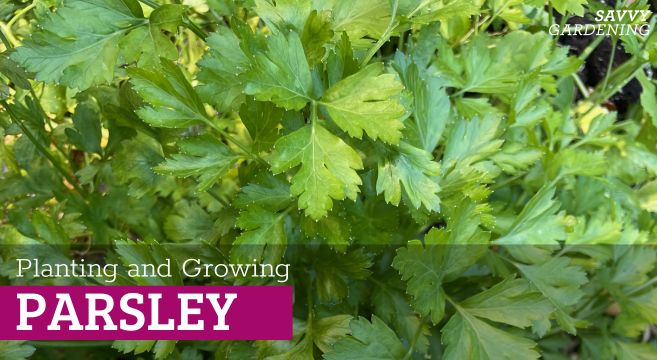
Parsley is probably the herb I use the most in my cooking. I add this tasty ingredient to soups and stews, I snip it into fresh lettuce or quinoa salads, I whip it into salad dressings, and I stir it into pasta dishes. I regularly have a few plants growing at a time. Not only do I plant parsley in my raised beds, I also sneak it into my ornamental containers for some fragrant, edible foliage. Here, I’ve gathered some parsley growing tips to help you encourage a bountiful harvest.
Besides the flavor, what I like about parsley is it’s a biennial (though many grow it as an annual). I don’t have to worry about the plant spontaneously flowering (ahem, I’m looking at you cilantro and basil), or diminishing flavor and harvests. The first year you grow parsley, the plant may live through the winter (it’s worth noting it could die off depending on where it’s been planted and the weather conditions). The second year, it will flower at some point in the spring. It’s likely you’ll be able to harvest some parsley before this happens. Once the plant produces flowers, there will be less leaves to harvest. You’ll want to make sure to add more parsley to the garden.

Types of parsley
There are two main types of parsley: curly and flat leaf. I grow both types and they taste pretty similar, if not the same. Curly leaf parsley used to be that ornamental herb that was arranged to jazz up appetizer platters or a nice piece of fish. But it deserves to be more than a sad garnish that’s relegated to the side of a plate. Curly parsley is full of flavor and I use it just as much as I do flat-leaf parsley varieties.

Parsley growing tips for sowing seeds
Parsley seeds take a long time to germinate indoors (up to six weeks) and the plants are a bit slow to develop. I highly recommend starting them under grow lights. You can sow indoors in seed starting mix about 10 to 12 weeks before the last spring frost. Some gardeners will soak seeds for 24 to 36 hours in hot or warm water. Sow seeds one and a quarter inches (3 cm) deep and 3 inches (8 cm) apart. Soil should be kept consistently moist (but not water-logged) to encourage germination. Use a spray bottle or mister to do this, so you don’t wash the seeds away.
When it’s time to plant your parsley outdoors, choose an area with well-drained soil. Amend with a bit of organic matter to add nutrients to the soil. Gently tease the roots apart to remove them from their seedling pot—they are delicate! Plant seedlings about 6 inches (15 cm) apart.

Planting parsley seedlings
Because I start a lot of other veggies indoors from seed, I generally purchase parsley plants from my local nurseries. Depending on the size of the pot, I often find that you can easily divide a clump into a few plants. Plant each seedling in a spot that gets full sun, that’s been amended with compost, and that gets a bit of shade throughout the day. Whether you plant parsley in a pot or in the garden, make sure the soil drains well.
If you’re companion planting, flat leaf or curly parsley are good companions with asparagus, corn, carrots, onions, tomatoes, and chives.

Grow extra parsley for swallowtail caterpillars
I grow several parsley plants at a time. One, because I use a lot, so I like to have lots of plants to cut from. Two, if the swallowtail caterpillars discover it, I’ll still have some left for myself. (Though they also love dill!) One year I came back from summer vacation to discover about 11 caterpillars on one poor, nearly decimated plant. I bought another to immediately put beside it so they didn’t find my other plants in the garden! The other parsley eventually grew back.
Honestly, I don’t mind feeding these future pollinators. I feel so satisfied watching swallowtail butterflies flit about the yard, knowing I provided crucial host plants.

Parsley growing tips for winter
I love that parsley is a cold tolerant herb. It’s hardy down to about -30°F to -20°F (-34.4°C to -28.9°C), depending on your garden’s conditions. One Christmas Eve, as it lightly started to snow, I snipped some parsley that was still thriving in the vertical raised bed on my driveway for one of my holiday dishes!

I try to plant parsley in areas of the garden that are more protected, where the soil is slower to freeze. Straw mulch acts as a bit of insulation, but you may also want to add floating row cover as protection. I’ve done this with cold-tolerant vegetables and herbs, like parsley, kale, and bok choy.
If you let your parsley plants flower in the spring (provided they’ve made it through the winter) you’ll attract beneficial insects, like predatory wasps and hoverflies.

Plant parsley with flowers as an ornamental in pots
Parsley, as well as a variety of other herbs, tends to sneak its way into a lot of my container arrangements—especially curly parsley because it adds that vibrant green crinkly texture. The foliage complements whatever flowers I have planted. And yes, I still harvest parsley from those pots, too. A regular haircut throughout the growing season encourages more growth.

Harvesting parsley
Harvesting your parsley plant frequently will encourage fresh growth, resulting in bushier plants. Use clean herb scissors to snip the stems. Always be sure to trim from the outsides of the plant, so new shoots can grow up the middle.
I’m not as much of a fan of dried parsley (I dry other herbs, like oregano), so to preserve what I trim (if I have no use for it at the time of harvesting), I’ll freeze it into ice cube trays and then use those cubes in winter sauces. You can also bundle it tightly and roll it in a freezer bag.
Discover parsley’s tasty roots
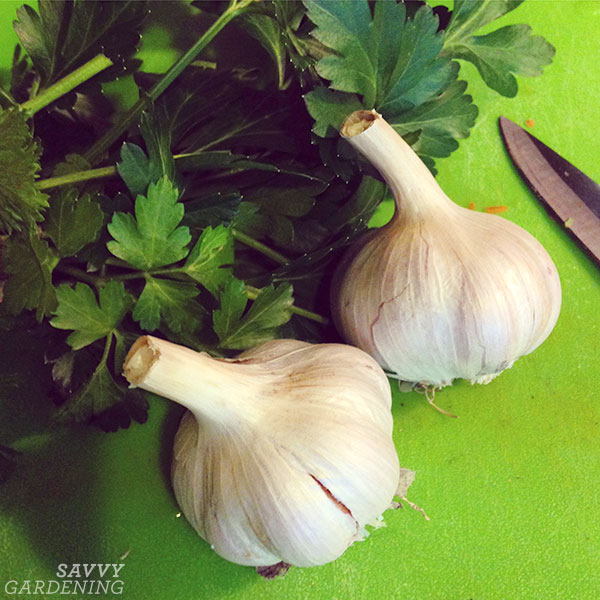
A few years ago, while visiting a rooftop kitchen garden in Whistler, B.C., a chef on the tour pulled out a parsley plant and explained how he grated the root into various dishes. Parsley can develop a long taproot, like a skinny carrot. It has a stronger flavor than the leaves, but it’s pretty tasty!
There is also a root vegetable called parsley root. It looks and tastes similar to a parsnip with parsley tops that can be harvested throughout the growing season. I wrote about parsley root here.
Parsley growing tips for indoor plants
While a parsley plant that hasn’t been watered outside is a bit forgiving, I have found that indoors, you need to keep a closer eye on it. Indoor parsley craves a lot of light and needs to be watered often (when the soil is dry to the touch). Make sure your pot has drainage holes so the plant’s roots don’t sit in water. Don’t forget to harvest your plant frequently as you would outdoors. This will help stimulate new growth.

More herb-growing articles

I moved my potted parsley into my kitchen once it started to snow here – zone 6. I water it regularly and add a bit of liquid fertilizer once a month. but the leaves have gone mottled. At first I though it was like a mildew on the leaves but its the leaves themselves. when the plant was outdoors this summer it was lush, green, erect and healthy. In doors it is limp, pale, and mottled. what did I do wrong?
Hi Eileen, I’m not sure about where you live, but here where I live, there have barely been any sunny days these last few weeks. My flat leaf plant was doing the same thing. I cut it back and put it under my grow lights and it’s bounced back, which leads me to believe it was a light issue. I also think it’s thirstier indoors because it’s so dry from the heat being on.
thanks so much for this information. i brought in a parsley plant this fall and would like to have more next winter and some other herbs.