
This post may contain affiliate links. If you make a purchase through links on our site, we may earn a commission.
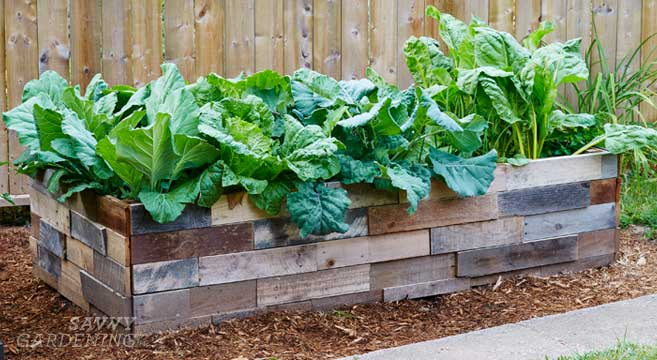
Are you planning to build and/or install a raised bed? I like to emphasize that raised beds can go anywhere that gets six to eight hours of sunlight a day. And they can be any size you like. However, for the purpose of this article, I’m going to talk about the standard rectangular raised beds that are generally built from untreated, rot-resistant wood (like Niki’s amazing raised bed setup) or concrete blocks, as well as what you might want to think about when preparing a raised bed garden.
When I made my first raised beds, these are a few tips I gathered, as well as things I wish I had thought about beforehand.
Things to think about when preparing a raised bed garden
1. What size will it be?
Raised beds are generally three to four feet wide by about six to eight feet long. This allows you to easily reach into the raised bed from the side to plant and dig and weed, without having to step into the garden where you risk compacting the soil.
The height can also be important. If you are putting your raised bed on a hard surface, like a driveway, or over hard-packed soil, you want to make sure it’s deep enough for plants (especially root vegetables like beets and carrots) to root. If it’s too shallow those roots will reach down into that subsoil (or hard surface) and hit a brick wall. I usually recommend at least 10 to 12 inches.
2. How do you pick the perfect spot?
When preparing a raised bed garden, location is everything, but it doesn’t have to be your backyard. Your raised bed could go in a sunny side yard, your front yard, or even your driveway.
You’ll want to make modifications if you have a slope and assess whether the area drains well. Here are some tips for planning where to put your raised bed.
3. How will you get rid of grass?
Good question because this is a common concern. If you’ve ever tried to cut out and lift sod, you know what an enormous task it is. An easier way to get rid of grass is to outline the space and cover it with a layer of cardboard and cover that with a layer of soil. The grass will break down and voilà! A new garden site. Doing this in the fall will allow everything to break down over the winter.
4. Do you want to install irrigation?
If you want to set up a whole drip irrigation system with a line running from your tap or rain barrel, you might want to do this before your raised bed areas are finished and filled. That way you can run hoses under pathways or layers of mulch, and adapt the bed around where the hose attaches to the irrigation system.
5. How much soil will you need and what kind?
There are some handy soil calculators out there that will help you determine how much you need to fill your raised bed, like this one from Gardener’s Supply Company.
As far as type of soil, I like to emphasize buying the best quality that you can afford when preparing a raised bed garden. When I had multiple raised beds to fill, I ordered triple mix from a local supplier (after chatting with them on the phone about my options) and top-dressed it with organic vegetable compost. I like to recommend leaving some in reserve to replenish your raised beds throughout the season. Please visit this link if you want more details on the best soil for raised beds.
6. Should you stake the sides?
One thing I wish that I had done when I built my first two raised beds is install a couple of midpoint stakes to prevent the beds from shifting over time. This is one of my number one raised bed tips!
Not sure how many vegetables you can grow in each one of your beds? Here are several illustrated 4×8 raised bed layout plans you can use to determine the placement and spacing of your veggie plants.
For more information on gardening in raised beds, check out the following articles:
- Elevated raised bed gardening: The easiest way to grow
- Fabric raised beds: An easy, inexpensive way to get started
- The benefits of raised bed gardens
- 5 tips for growing tomatoes in raised beds
- How to start a vegetable garden FAST
Do you garden in raised beds? Share your experience in the comment section below.
photography by Donna Griffith for Raised Bed Revolution
Pin it!


Such a useful post you shared. The tips you discuss in your content is so informative for everyone.
Hi Tara
I have been sticking to container gardening till now but have some large shrubs at the moment which i want to plant into the ground – namely hydrangea, pieris, some rose, black elderflower. I wanted to make a raised bed because they are currently sitting in pots that are about 15cm deep. I am not sure if i will find good soil if i dig that deep into my garden. I think if i make a raised bed with compost, i might need to wait a season before transplanting them, since the soil might need to settle down & become firm to hold them…What do you reckon?
Hi RD, it’s true, if you just fill with compost, it might be really light and fluffy when you try to dig in a big shrub. But you might see success if you even leave for a few weeks. You might also want to add some bags of garden soil. If your beds are shallower and the shrubs will be reaching into the sub-soil, provided it isn’t hard-packed, they might stay in place.
I am thinking of trying this next year. Do you rotate the soil out yearly, or add fresh stuff? How do you prepared the soil as you don’t use a tiller? Also, do you need to buy smaller plants for these types of gardens? I just have a big regular type of garden, but am just starting to read up on this method and I think the fact that this type of gardening has way less weeds is very intriguing to me.
We are a family of 6 (all boys) so I also wonder if this is a good way to go or if there is another method??
Thank you!! 🙂
Hello! No need to rotate the soil, just be sure to amend with compost in the fall and/or spring. Here’s an article I posted yesterday about soil: https://savvygardening.com/the-best-soil-for-a-raised-garden-bed/
With a raised bed, you won’t need to prepare the soil underneath, unless it’s very shallow. You should be able to just fill and start planting.
Depending on the size of the raised bed, you should be able to plant regular varieties, but there are smaller, more compact varieties for small spaces.
I think raised bed gardening would be absolutely fine for a big family – you might even want to build more than one!
Lots of great tips here. I’ve just finished building a 12 ft long cedar raised bed that’s going to go along my fence. Last summer I had previously removed all the grass in my side yard and covered it with landscape fabric and crushed gravel. I’m wondering if it’s necessary for me to place more landscape fabric under the raised beds that will be sitting on top of gravel from last summer. Do people do this to ensure soil doesn’t spill out of the bottom or is this only to prevent weeds?
Thanks !
I’m not sure it’s necessary to add more landscape fabric. If you nestle the raised bed into the gravel, the soil shouldn’t come out. I would say the main purpose of the landscape fabric would be for weeds, which you’ve taken care of under the gravel. 🙂
My daughter wants to build some raised beds in our back yard. Right now, our small yard is completely gravel/river rocks, and was recently (about a month ago) aggressively sprayed with weed killer/pre-emergent that is supposed to prevent new growth for a year. Can we now do raised beds without everything she plants dying? Would we just need to do taller beds (so, move the rock, lay down landscape fabric, and build a bed 12-18″ high)? Also, the only place we can put the beds is along a stuccoed block wall, which I know retains lots of heat during our Phoenix summers (and late spring and most of fall, actually). Is there something we can place between the bed and the block wall to insulate it so the plants aren’t fried? I’m completely new to doing ANYTHING with plants or gardens, and would like to have this project not set up for failure from the very start. 😉 Thanks!
Hi Joy,
Raised beds would certainly allow for you to control the soil that’s put inside, but I can’t say for sure that your crops won’t be affected by spray residue. I certainly wouldn’t spray in future if you plan on growing food. If you’re concerned about the heat, you can get shade cover that you can put over the raised beds.
Hi Tara! I am new to gardening! I will be putting in a raised garden bed this year. One question, my husband fertilizes our lawn, is this safe for the vegetables I plan to grow? Thanks!
Hi Courtney, I would say it depends on what he uses as a fertilizer. If it’s chemical fertilizer, I would definitely keep it far away from the raised beds. If it’s organic, I wouldn’t be as concerned, though you still want to keep it away from your crops. Lawn fertilizers are more focused on nitrogen, which can encourage leaf growth, but not the actual edible or the roots. Happy Gardening! ~ Tara
Hi Tara! I am new to gardening! This year I will be putting in a raised bed. One question, my husband uses fertilizer on our lawn, is this safe for the vegetables I plan to grow in the raised bed??
Hey I’m looking into making a raised garden bed but I bought my house after we got snow. How would I start this process when the snow melts to bed ready to plant in may? Would I have to dig up the ground?
Hi Kelsey, You can dig up the grass, which can be time-consuming, or you can use the cardboard trick. Simply place cardboard overtop of the area where you want your raised bed and place the raised bed overtop. Once you fill it with soil, the grass underneath the cardboard will decompose over time. 🙂
Hi,
I have been researching about the terrace gardening options, and i wanted to know if the raised bed method on terraces (or any hard surfaces) would give results as good as beds made on land? And what about productivity? Do the quantities differ? (land vs terrace)
I haven’t gardened in-ground on a terrace before, but I would say provided you provide the right conditions, your garden can thrive anywhere. Whether a raised bed is placed on a hard surface or dug into the ground, you’ll want to be sure to regularly amend the soil, water, and feed plants with an organic fertilizer. The key is healthy soil!
I have found the perfect FREE raised garden beds. As I got older, I could no longer bend to plant or weed and as a senior on low income SS, I needed something CHEAP. As long as you don’t care what they look like, old truck canopies are GREAT and you can find lots of them for free. Just put braces so the back window will not accidentally open. A lot of people will even deliver them, so they do not have to pay a land fill to get rid of them. You have the initial cost of the soil, but after that, they are perfect. I built covers for mine from CPVC pipe and plastic garden fence, both cheap.
That’s such an interesting idea, Lucie! I’ve heard of some unique up cycling options, but not truck canopies. 🙂