
This post may contain affiliate links. If you make a purchase through links on our site, we may earn a commission.
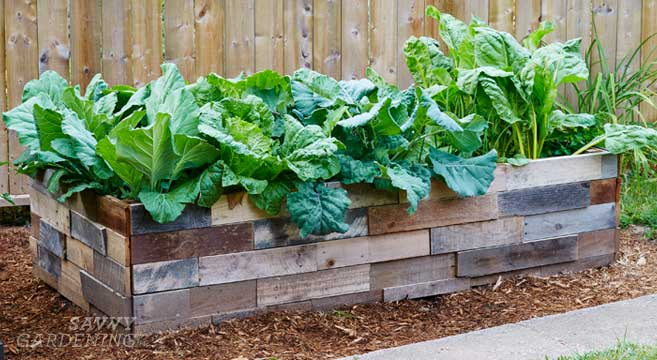
Are you planning to build and/or install a raised bed? I like to emphasize that raised beds can go anywhere that gets six to eight hours of sunlight a day. And they can be any size you like. However, for the purpose of this article, I’m going to talk about the standard rectangular raised beds that are generally built from untreated, rot-resistant wood (like Niki’s amazing raised bed setup) or concrete blocks, as well as what you might want to think about when preparing a raised bed garden.
When I made my first raised beds, these are a few tips I gathered, as well as things I wish I had thought about beforehand.
Things to think about when preparing a raised bed garden
1. What size will it be?
Raised beds are generally three to four feet wide by about six to eight feet long. This allows you to easily reach into the raised bed from the side to plant and dig and weed, without having to step into the garden where you risk compacting the soil.
The height can also be important. If you are putting your raised bed on a hard surface, like a driveway, or over hard-packed soil, you want to make sure it’s deep enough for plants (especially root vegetables like beets and carrots) to root. If it’s too shallow those roots will reach down into that subsoil (or hard surface) and hit a brick wall. I usually recommend at least 10 to 12 inches.
2. How do you pick the perfect spot?
When preparing a raised bed garden, location is everything, but it doesn’t have to be your backyard. Your raised bed could go in a sunny side yard, your front yard, or even your driveway.
You’ll want to make modifications if you have a slope and assess whether the area drains well. Here are some tips for planning where to put your raised bed.
3. How will you get rid of grass?
Good question because this is a common concern. If you’ve ever tried to cut out and lift sod, you know what an enormous task it is. An easier way to get rid of grass is to outline the space and cover it with a layer of cardboard and cover that with a layer of soil. The grass will break down and voilà! A new garden site. Doing this in the fall will allow everything to break down over the winter.
4. Do you want to install irrigation?
If you want to set up a whole drip irrigation system with a line running from your tap or rain barrel, you might want to do this before your raised bed areas are finished and filled. That way you can run hoses under pathways or layers of mulch, and adapt the bed around where the hose attaches to the irrigation system.
5. How much soil will you need and what kind?
There are some handy soil calculators out there that will help you determine how much you need to fill your raised bed, like this one from Gardener’s Supply Company.
As far as type of soil, I like to emphasize buying the best quality that you can afford when preparing a raised bed garden. When I had multiple raised beds to fill, I ordered triple mix from a local supplier (after chatting with them on the phone about my options) and top-dressed it with organic vegetable compost. I like to recommend leaving some in reserve to replenish your raised beds throughout the season. Please visit this link if you want more details on the best soil for raised beds.
6. Should you stake the sides?
One thing I wish that I had done when I built my first two raised beds is install a couple of midpoint stakes to prevent the beds from shifting over time. This is one of my number one raised bed tips!
Not sure how many vegetables you can grow in each one of your beds? Here are several illustrated 4×8 raised bed layout plans you can use to determine the placement and spacing of your veggie plants.
For more information on gardening in raised beds, check out the following articles:
- Elevated raised bed gardening: The easiest way to grow
- Fabric raised beds: An easy, inexpensive way to get started
- The benefits of raised bed gardens
- 5 tips for growing tomatoes in raised beds
- How to start a vegetable garden FAST
Do you garden in raised beds? Share your experience in the comment section below.
photography by Donna Griffith for Raised Bed Revolution
Pin it!


I am a first time gardener. My husband built raise beds 4′ deep by 12′ long. I lined the beds with a heavy plastic for weed prevention but have read to not use plastic however, we have already filled with soil. Without taking soil out to remove the plastic, do you think it would be alright to poke holes through the plastic for drainage? Thanks
Hi Chera, Plastic along the bottom will likely affect drainage because the water will have nowhere to go. I think poking holes, though a bit labor-intensive, could work to ensure that water is not pooling in your raised bed.
I am a first time gardener in zone 6A. I have build a raised bed out of cedar, 15 inches high, and installed a bottom made of plywood with drilled drainage holes, as the bed will sit on my paver stone patio. 2 questions. Should I use a garden fabric as a liner, or is that overkill? And should I add worms to the soil after I have filled the box, since they won’t have access to the box with no contact with the ground? I plan on making Mel’s mix to fill the box.
Hi Judith, I think if your bed has drainage holes and is sitting on pavers, you won’t need the garden fabric. I think it will drain better without. I think your garden would definitely benefit from worms. Sometimes if I find worms in my in-ground gardens, I move them to my small raised beds that are on patio stones. 🙂
I really enjoyed the article. I do not have a great place for soil in my area. I do have a place to buy mushroom compost to mix with my soil, it has done great for my flower gardens. I was wondering if mushroom compost is ok for the triple mix. I was also wondering if you could recommend a type of irrigation for raised beds. Do you have any articles on growing in a green house?
I think mushroom compost is a great soil amendment. Gardeners Supply Company has some great irrigation options – what you choose will depend on your raised bed setup. We don’t currently have any articles on growing in a greenhouse.
Hi, it’s October here in Texas and I’ve been thinking I will start a raised bed garden next spring. Reading this, I feel I should prepare the space now given it will go on top of grass in the backyard. Should I lay down the landscape fabric and then put the frame over it and cardboard along the base? It’s St. Augustine so quite hardy grass in the entire area.
It’s a great idea to prepare your gardening the fall. I would lay the cardboard first (use rocks or something to hold it down) and leave it for a bit to give it time to kill off some of the grass. Then you can install the raised bed and if you still think you need it, the landscape fabric.
I am wanting to use a raised planter inside for our residents to use in our activity room so I would need one that wont drip water. Is this possible and how would I do it?
Hi Paula, I would look for a sub-irrigated planter. The water for the plants is held in a reservoir and waters them from underneath. Look for companies like Crescent Garden.
Your site is so helpful. Thanks. My question is: the container will be on top of pavers so i’m Concerned about drainage. Do you have a suggestion? The box is 3ft tall and made of cedar.
At three feet tall, I think the soil should absorb most of the water before it drains out the bottom. You could fill the bottom of your raised bed with gravel to help with drainage.
We recently started a small landscaping company in our town and came across this article. The mulch calculator was a big help because it seems like each yard or flowerbed we do has different depths and sizes. Thanks for the info! Do you have any recommendations for mulch in high altitudes where the temperatures are extreme?
Unfortunately I’m unfamiliar with high-altitude gardening, but your local garden center or nursery should be able to provide some insights! 🙂
Let me add one tidbit to my last question- the company our neighbor uses is JP McHale who claims to use eco-friendly products to rid the mosquitoes issues.
HI Tara, Thanks for such great tips!! We are seriously thinking about putting in raised beds to start a garden. I have been doing a ton of research and I’m excited. Although, we do not use any products on our lawn for years… and are on .30 property…. we have neighbors that do. Our garden like I said will be raised. Can any products they use or the neighbor two doors down from us that has a company come in to spray his backyard not to get insects affect our garden? Signed, truly concerned about this before we begin. Thanks so much!
I understand how drift from chemicals can be a concern. The fact your neighbor is purportedly using an eco-friendly product is encouraging. I’m not able to say whether there will be residue in your garden. You could see if a soil test yields anything.
I am building my second 20’x4’x15″ raised bed now. The one I built last spring was placed on top of landscape fabric, lined with cardboard, then a 6″ layer of horse manure mixed with the fall leaves from the year before, covered with another layer of cardboard, then filled with Triple Mix, amended with azomite and limestone. Initially, the ‘soil’ was almost too fluffy (young plants could be dislodged even with gentle watering) but it became more dense as the summer progressed, which was a good thing. However, healthy, tall plants (e.g. okra, Brussels sprouts, broccoli, dahlias) fell over during high winds (wind speeds around 20 mph). Of course, I tried staking them but didn’t want to drive the stakes through the landscape fabric. The soil was not compact enough to support the stakes when the plants were tied to them. I was able to tie some stakes to the PVC arches I had built into the frame at 3′ intervals, but not all were close to an arch (so they just kept on growing where they fell.)
In the fall I discovered that these plants had very long main roots which had curled around when they reached the landscape cloth at the bottom of the bed.
Has anyone else encountered this problem? Did you find a good solution?
Is it better to eliminate the fabric barrier so the varieties with deep roots can be well-grounded?
I am loathe to eliminate the barrier because we are plagued with quack grass in this area, a very invasive plant which spreads by sending out tough roots. Raised beds are a wonderful solution, except for the toppling plants.
I have encountered this issue with landscape fabric, as well. It’s great for shallower plants, but doesn’t allow for things like tomato cages, etc. What you could do is remove the landscape fabric and if you think quack grass will still be a problem, smother with cardboard instead, which should smother the grass and in time, break down naturally. And you can put stakes through. 🙂