
This post may contain affiliate links. If you make a purchase through links on our site, we may earn a commission.
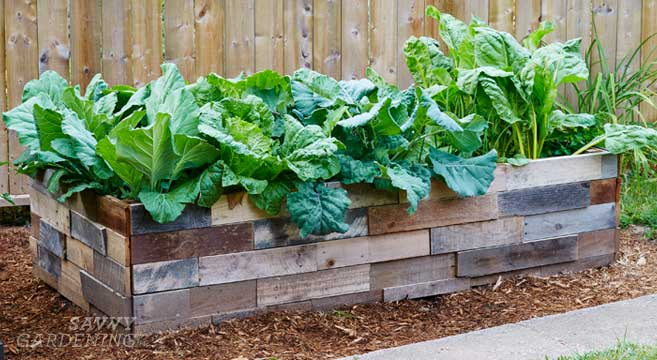
Are you planning to build and/or install a raised bed? I like to emphasize that raised beds can go anywhere that gets six to eight hours of sunlight a day. And they can be any size you like. However, for the purpose of this article, I’m going to talk about the standard rectangular raised beds that are generally built from untreated, rot-resistant wood (like Niki’s amazing raised bed setup) or concrete blocks, as well as what you might want to think about when preparing a raised bed garden.
When I made my first raised beds, these are a few tips I gathered, as well as things I wish I had thought about beforehand.
Things to think about when preparing a raised bed garden
1. What size will it be?
Raised beds are generally three to four feet wide by about six to eight feet long. This allows you to easily reach into the raised bed from the side to plant and dig and weed, without having to step into the garden where you risk compacting the soil.
The height can also be important. If you are putting your raised bed on a hard surface, like a driveway, or over hard-packed soil, you want to make sure it’s deep enough for plants (especially root vegetables like beets and carrots) to root. If it’s too shallow those roots will reach down into that subsoil (or hard surface) and hit a brick wall. I usually recommend at least 10 to 12 inches.
2. How do you pick the perfect spot?
When preparing a raised bed garden, location is everything, but it doesn’t have to be your backyard. Your raised bed could go in a sunny side yard, your front yard, or even your driveway.
You’ll want to make modifications if you have a slope and assess whether the area drains well. Here are some tips for planning where to put your raised bed.
3. How will you get rid of grass?
Good question because this is a common concern. If you’ve ever tried to cut out and lift sod, you know what an enormous task it is. An easier way to get rid of grass is to outline the space and cover it with a layer of cardboard and cover that with a layer of soil. The grass will break down and voilà! A new garden site. Doing this in the fall will allow everything to break down over the winter.
4. Do you want to install irrigation?
If you want to set up a whole drip irrigation system with a line running from your tap or rain barrel, you might want to do this before your raised bed areas are finished and filled. That way you can run hoses under pathways or layers of mulch, and adapt the bed around where the hose attaches to the irrigation system.
5. How much soil will you need and what kind?
There are some handy soil calculators out there that will help you determine how much you need to fill your raised bed, like this one from Gardener’s Supply Company.
As far as type of soil, I like to emphasize buying the best quality that you can afford when preparing a raised bed garden. When I had multiple raised beds to fill, I ordered triple mix from a local supplier (after chatting with them on the phone about my options) and top-dressed it with organic vegetable compost. I like to recommend leaving some in reserve to replenish your raised beds throughout the season. Please visit this link if you want more details on the best soil for raised beds.
6. Should you stake the sides?
One thing I wish that I had done when I built my first two raised beds is install a couple of midpoint stakes to prevent the beds from shifting over time. This is one of my number one raised bed tips!
Not sure how many vegetables you can grow in each one of your beds? Here are several illustrated 4×8 raised bed layout plans you can use to determine the placement and spacing of your veggie plants.
For more information on gardening in raised beds, check out the following articles:
- Elevated raised bed gardening: The easiest way to grow
- Fabric raised beds: An easy, inexpensive way to get started
- The benefits of raised bed gardens
- 5 tips for growing tomatoes in raised beds
- How to start a vegetable garden FAST
Do you garden in raised beds? Share your experience in the comment section below.
photography by Donna Griffith for Raised Bed Revolution
Pin it!


Hi,
I am starting my first raised beds this weekend. They will be going directly on top of soil although I will be using a landscape fabric as a weed barrier. Do you think I can fill my beds with soil from the garden (pathways around raised beds) and then mix with compost bought from garden centre? Alternately will I be ok to use and can you recommend some ready mixed stuff from a garden centre?
Hi Hannah,
If the soil doesn’t have weeds in it and it’s pretty healthy, you can definitely use it on the bottom. You just want to make sure you aren’t depositing weed seeds on TOP of the landscape fabric! For mine, I used a triple mix that I had delivered and then top-dressed with compost. If you’d like to make your own mix, Jessica listed some recipes here: https://savvygardening.com/diy-potting-soil/
Happy gardening in your new raised beds!
Tara
My biggest concern is my neighbors use herbicides and pesticides. how do you deal with that?
I’m not sure, to be honest, beyond asking them to stop. You could try to site the garden as far away as possible from the chemical sprays and perhaps plant non edibles around the garden that will shield it a bit. I found this article and they recommend the same thing – trees or something to catch the spray if it drifts… https://grist.org/living/how-can-i-protect-myself-from-a-pesticide-spraying-neighbor/
Tara — Thanks! No ground freeze, but better safe than sorry….
One more question, if that’s okay. Would you sit the raised bed on top of the ground (albeit with stakes to hold in place), or have the wood go down an inch or so into the ground level for mooring? I had a very casual bed that I replaced that I did the latter way, and it seemed the wood had been damaged by boring, bermuda grass working its way in, etc…..
Again, much appreciated!
Hi John, generally I’ve just sat the raised bed in place. Some of my raised beds have stakes, so those have gone into the soil to moor the bed in place, but the raised bed itself just sits on top of the soil.
Hi, I’m thinking of building a pair of 8-foot-long beds. Would you recommend in-line braces mid way?
Hi John, Great question! When I give my raised bed talk (to garden clubs, etc.), one of the things I mention is that I wish I’d put a mid-point stake when building my first two raised beds because they’ve heaved a little with freeze/thaw each year. So yes, I would definitely recommend in-line braces mid-way, especially if your bed is 8 feet long and you live in a region where the ground freezes in winter.
Hi Tara!
Great article. I have been looking into this for a long time, as I have a bad back and would like to have raised beds to give myself an easier time. I am wondering, as it doesn’t seem to be talked about much, if there is a maximum height recommended for a raised bed. I am looking to build my beds to about waist height or in my case about 3 1/2 ft. I am worried about the soil weight, of course, but was thinking I could build my beds with concrete or something like that. Are there other issues I should be concerned about with that kind of a setup? Thank you so much!
Hi Trevis, I don’t think there is a maximum height. If you are concerned about weight, though, you could fill the bottom half (depending on the depth) with plastic plant containers or water bottles to lightly fill some of that space before filling with soil!
Can I use a tarp under my raised beds to deter weeds and grass from growing. I was thinking I could poke holes in it for drainage?
Hi Cynthia, I fear that a tarp wouldn’t drain well, even with holes. Also, the weeds will then be able to grow up through the holes. I would recommend landscape fabric, which is permeable. 🙂
I am looking to try a couple of raised beds or containers this year with hopes to do much more next year. The only open, sunny spaces I have are over my leach field, and I am told that I cannot grow food plants there. So, can I grow in large containers that do not allow any root contact with the actual hard clay dirt? If so, do they need to be deeper than the 10-12 feet you advise for raised beds? Should I use a couple of inches of gravel at the bottom for drainage to keep the soil from being too wet? Sorry so many questions. This is all very new to me.
Hi Laurie, I’ve had a couple questions about this, but I think it’s best answered by an expert from a septic company. I found this article that talks a little about why you shouldn’t plant over a leach field: http://homeguides.sfgate.com/can-raised-garden-top-septic-field-101175.html
However I would make sure to consult a septic company to make sure that structurally, you are not going to damage your system.
I am adding raised beds to my garden. What height do you recommend if placing on grass with a cardboard/mulch bottom. These boxes are going to be used for tomatoes. Our existing garden has become the shaded area of the yard, the neighbors planted a tree.
Hi Allison,
I usually recommend about 10 to 12 inches high for a standard raised bed. 🙂
Happy Gardening!
Tara
Hi Carolyn,
I would make sure that you amend the soil with compost. You could add a light mulch, like straw, which will keep the weeds down and help retain moisture. There are some great charts online that show you what to plant that will attract the “good guy” insects to take care of the bad guys.
Hi!
I am so excited to start my raised beds this year!! I am unfortunately starting late down here in GA where it’s already so warm. I wonder, in terms of grass, I am looking to build in a great section of our yard. What do I do about the grass? Could I till it up or should I put something down? I am against the use plastic in our garden, however. What would you suggest?
I also wonder, since it is so warm, could I just plant seeds and let them go or should I sprout them ahead if time? It’s already in the 70’s here!
Thank you so much
Hi Jenny, If it’s late in the season, I would recommend putting cardboard down over the grass and covering with a layer of mulch. Now usually you would leave it for a bit so the grass can decompose, but I say just put the raised beds overtop of the cardboard and mulch and fill with soil! You should be fine direct-sowing seeds in the garden at this point. Check the seed packets to see how warm the soil has to be to plant, but I feel like you should be good. You are SO far ahead of where I live!