
This post may contain affiliate links. If you make a purchase through links on our site, we may earn a commission.
The first time I saw a harlequin cabbage bug in my vegetable garden, I nearly admired it before I realized what it was doing to my kale and cauliflower plants. While this pest is common in the southern U.S., it’s a relative newcomer here in Pennsylvania. It was a pest I had never encountered until about 5 years ago. In this article, I’ll share information about identifying the harlequin cabbage bug (also called the harlequin bug) and fill you in on some organic control measures I’ve found to be effective.

Introduction to the harlequin cabbage bug
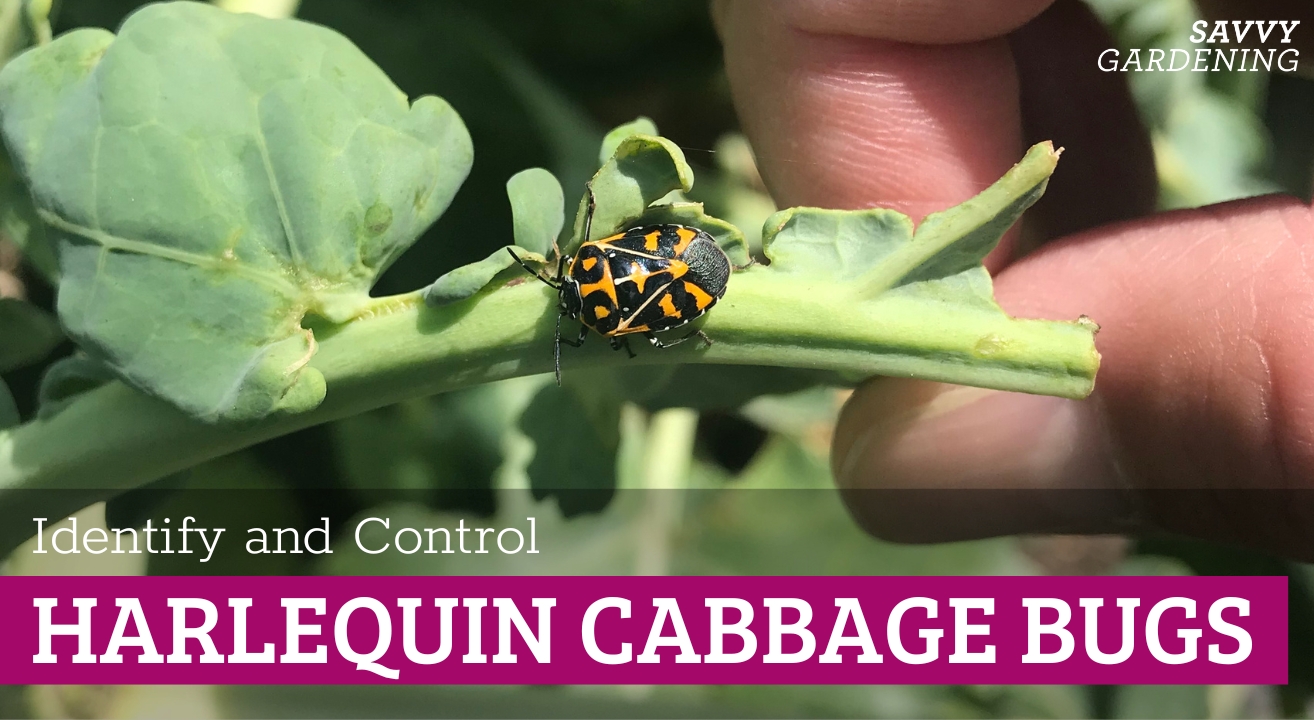
With its glossy shield-shaped body, covered wings, and bright orange markings with black patterning, this member of the stink bug family looks more like a sports car than a serious vegetable pest. But this true bug, Murgantia histrionica, is a sap-feeding insect in the order Hemiptera with a tendency for finding cabbage-family crops extra tasty. Kale, cabbage, broccoli, cauliflower, turnip, Brussels sprouts, mustards, radishes, arugula, and related weeds can all serve as host plants. I find them most frequently on my fall kale, cauliflower, and broccoli.

Identifying the harlequin bug
What makes this pest especially frustrating is that both adults and nymphs feed on plants. They pierce leaves and stems with needle-like mouthparts and draw out plant juices, leaving pale stippling, cloudy yellow-white blotches, wilting, distortion, and, under heavy infestations, plant death. Young plants are particularly vulnerable because they don’t have as much leaf area, though older plants can also lose vigor and quality. In a small garden, a handful of bugs can set brassica plants back noticeably. Learning how to identify their damage and the bugs themselves as both nymphs and adults, is important so you can take early action.
Lifecycle of the harlequin cabbage bug
In southern regions where the climate is warmer, adults can overwinter in crop residue, weeds, loose organic matter, and wild habitat near the garden. Then, they emerge in spring to feed and lay eggs. In northern growing zones, harlequin cabbage bugs aren’t often spotted until later in the season as the adults move northward from warmer climates as the growing season progresses. In recent years, the harlequin cabbage bug has become more common in northern regions where crucifers are grown for long stretches of the season.
Whether you live in the north or the south, warm weather speeds development, and females may produce multiple generations in a single season. That means control is not a once-and-done chore. The best results come from attentive scouting, quick removal, physical exclusion, and proper garden sanitation. As with all vegetable garden pests, these tools are practical and effective when done properly.

Feeding habits and behavior
When it comes to harlequin cabbage bugs, correct identification is half the battle. An adult harlequin cabbage bug is usually about 3/8 to 1/2 inch long, with the flattened, shield-like outline typical of stink bugs. The color pattern varies depending on the life stage, but the contrast is unmistakable: black bands over orange or yellow, often arranged in a geometric pattern. The harlequin bug’s distinctive body shape helps distinguish it from caterpillars and beetles. If disturbed or squished, adults may release the familiar stink bug odor. They often gather on the underside of leaves, along stems, or near tender new growth, and they quickly scoot over to the far side of a leaf when you reach for them.

Eggs are the stage I teach gardeners to look for first because removing them prevents potential damage from the start. Female insects lay eggs in small clusters, often in tidy rows, on leaf undersides. Each egg looks like a little upright barrel, pale or whitish, with dark bands or markings. Once you learn what the eggs look like, you’ll spot them quickly during routine scouting.
Nymphs hatch and may linger around the empty eggshells before spreading out. They are rounded, wingless, and brightly patterned, becoming more adult-like as they molt through several stages. Their repeated molts are one reason this insect seems to change appearance from week to week, making identification challenging for some gardeners.

Signs of damage
The damage caused by harlequin cabbage bugs is quite distinctive. Unlike cabbage worms, flea beetles, or slugs, these true bugs do not chew holes. Instead, they suck sap from the leaves. Their feeding produces stippled, cloudy, or yellow-white splotches where plant cells have been damaged. These symptoms can spread quickly as leaves eventually brown around the damaged areas, curl, or wilt. I often think harlequin bug damage makes the leaves look scorched.
On broccoli and cauliflower, stress can interfere with good head formation. If you see orange and black, shield-shaped insects plus pale blotching without holes, the harlequin cabbage bug is a likely suspect. Early morning scouting is useful because the insects tend to be slower, plants are less wilted from heat, and egg clusters are easier to find when you turn over the leaves carefully.

Effective organic controls for harlequin cabbage bugs
The most reliable organic approach is to combine several simple tactics rather than hoping for a single miracle spray. Here are some methods I’ve found to be effective.
- Hand removal: Start with hand removal. Carry a cup or jar of soapy water when you scout, then knock adults and nymphs into it. Crush egg clusters or remove the section of leaf that holds them. This may sound low-tech, but I find it surprisingly effective when done consistently, especially from mid-summer through fall. The goal is to interrupt reproduction before the population gets ahead of you.
- Use row covers: Floating row covers are another great tool because brassica crops do not need insect pollination to produce the leaves, stems, or heads we harvest. Install lightweight cover immediately after seeding or transplanting, and seal the edges with soil, boards, bricks, or landscape staples. Do not trap pests underneath by covering a bed that already contains overwintered adults or weed hosts. To prevent future infestations, rotate brassicas to a different bed and cover them with row cover immediately after planting. The harlequin cabbage bug cannot damage what it can’t access.
- Employ trap crops: Trap cropping can also help. Mustard, kale, and other preferred hosts can draw adults away from the crop you care most about. Monitor the trap crop closely, then destroy any insects you find there by hand, vacuuming, cutting and bagging infested foliage, or using an OMRI-listed product labeled for edible crops when appropriate.
- Organic spray solutions: Insecticidal soap and neem oil (look for brands certified by OMRI—the Organic Materials Review Institute) may suppress young nymphs when sprays contact them directly, and pyrethrin can be used as a last-resort organic knockdown. Always read the product’s label, avoid spraying when pollinators are active, and remember that even organic pesticides can affect beneficial insects. Good timing, good coverage, and restraint matter.

Preventative measures
Long-term prevention begins when your brassicas come out of the ground at the end of the growing season. Because adults overwinter in plant debris, remove spent brassica plants promptly, especially those that hosted harlequin cabbage bugs this season. Compost healthy residue properly, but bag or deeply bury heavily infested material. Keep mustard family weeds such as wild mustard, shepherd’s purse, peppergrass, bittercress, and other brassica relatives under control in beds, aisles, and nearby borders. These weeds can bridge the gap between crops and keep the harlequin cabbage bug supplied with food.
Crop rotation matters, too. Avoid planting spring cabbage where fall kale was left standing. In home gardens, that might mean moving cabbage-family crops to a different bed each season or utilizing succession planting. Healthy, unstressed plants tolerate some harlequin bug feeding better than weak plants, so steady moisture, good soil health, and proper plant spacing are an important part of pest management.

Get out and scout!
Finally, make scouting a habit. Check the undersides of leaves twice a week in warm weather and daily if you have a history of harlequin bug outbreaks. Remove eggs immediately, watch trap crops closely, and cover new plantings with row cover before adults arrive. When you stay ahead of each generation, harlequin bugs become manageable rather than devastating.
For more on controlling common vegetable garden pests organically, head here:

Leave a Reply