
This post may contain affiliate links. If you make a purchase through links on our site, we may earn a commission.
With lots of sunny spots in my front and backyard, I love gathering my container plants for full sun to put together my pots each year. I like to amass a whole bunch of annuals with various textures, blooms, and foliage before figuring out what will go where. I visit nurseries, my local grocery store’s garden center, and plant sales. I enjoy starting some annuals from seed, and I usually receive a few trial plants, too. My list of favorites grows each year. Here are some examples of what I like to grow.
Some years I choose a clear color theme. Others I enjoy playing with multiple hues to see what I can come up with. When I’m ready, I’ll set up an old plastic patio table in my backyard with lots of potting soil close at hand, pull out all my pots that need filling, and line up the plants, arranging them into their groups. I keep all the plant tags so I remember what did well. I also try to remember to fertilize regularly to encourage lush blooms. Read on for information about some fabulous full-sun plants for pots.

Favorite container plants for full sun
I love figuring out which plants will go together. I’ll sort of move them around until I settle on their permanent summer friends. I think a lot about shape and which plants will serve as the requisite “fillers, thrillers, and spillers.” I also like to sneak in some edibles, too, especially herbs, like basil, sage, parsley, and thyme. All of these plants attract valuable pollinators to the garden.

While most of the plants I use are annuals, I do sneak the odd perennial, like coral bells (Heuchera), into my container arrangements. At the end of the season, I’ll be sure to plant them somewhere in the garden so I can use them the following year. Or, I add them to an ornamental garden.

Cuphea
A new-to-me favorite that I discovered in recent years is Cuphea. This heat-tolerant flower was a hummingbird and bee magnet and did really well in my pots. The nectar-rich flowers last well into the fall. I even found a few flowers coming up through cracks in my concrete front porch. I had let them go to seed and they self-sowed.

Gomphrena
Ping Pong Lavender is a lovely variety of Gomphrena, a plant I first saw at the California Spring Trials. I fell in love with the quirky, spherical blooms. They look great in cut flower arrangements and provide a different shape to containers.

Verbena
Verbena is one of those dependable “fillers” in a container. It spreads nicely and blooms throughout the entire season. Even before all the flowers have bloomed, you get these lovely wreaths of color. As it spreads outwards, wind the stems through parts of your arrangement, so they blend in.

Calibrachoa
I can’t remember when I discovered these heat-tolerant, self-cleaning beauties, but at least one variety of calibrachoa makes its way into my containers each year. They mound well in hanging baskets and fill in nicely in containers, cascading over the sides of the pot. Sometimes I’ll work my whole container color combination around a calibrachoa.

Petunias
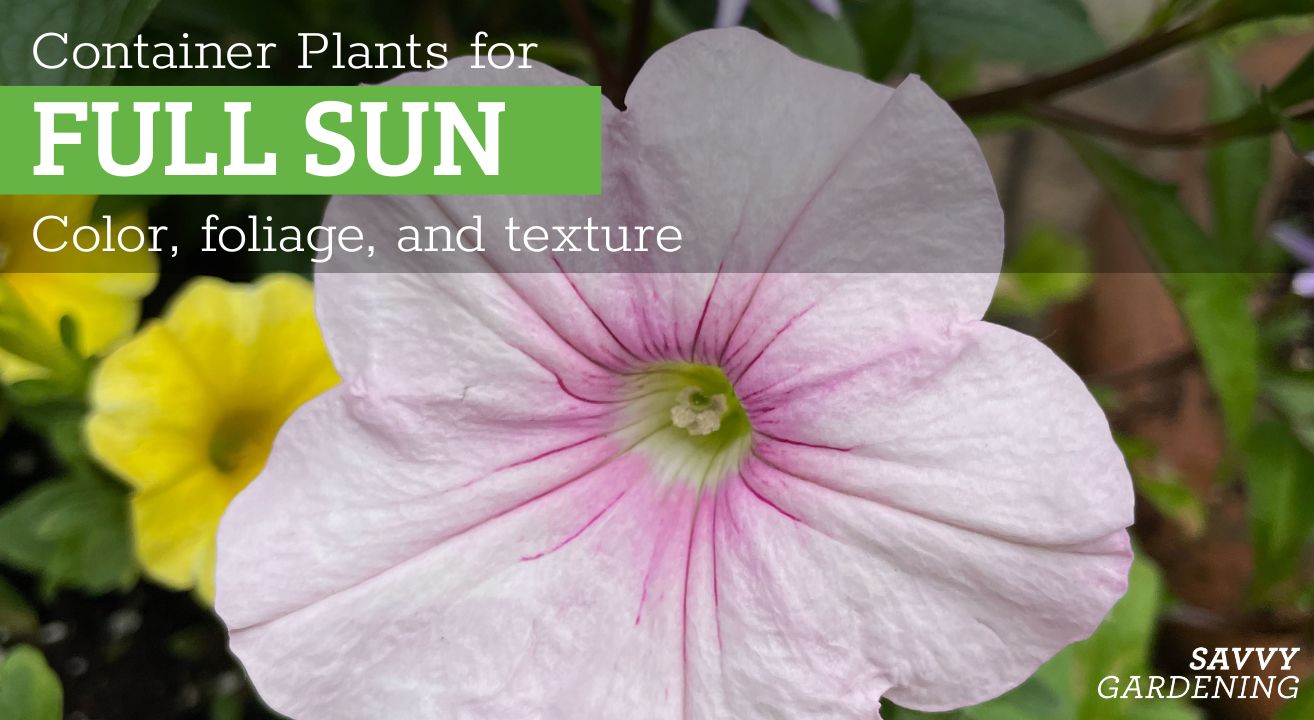
I used to have mixed feelings about petunias, mostly because they can get so darned leggy and their sticky petals require deadheading. However, there are SO many really vely varieties these days that I find them hard to resist. I just make sure to do the proper maintenance on them.

Plant breeders have also been working on blending some of the characteristics gardeners love about petunias with other plants. SuperCal, for example, is a hybrid combining the bigger petunia blooms with the interesting colours of calibrachoa. They are heat tolerant and their blooms don’t turn to mush after a hard rain. There are a few different types of Supertunias are self-cleaning, mounding plants that are heat and drought tolerant. I find the blooms to be super prolific and they last well into the fall.

Dahlias
I generally look for dahlia plants that are well on their way, but you could plant a dahlia tuber in a pot, giving it space to grow among the rest of your arrangement. Another option would be to give it a head start indoors about a month before you’re ready to plant outside. Whether you’re purchasing a tuber or plant, be mindful of how big the bloom will be. It would be a challenge to grow a dinnerplate dahlia in a tiny little pot!

Sneak in some edible container plants for full sun
Not only do herbs add their obvious fragrance and colour to a container arrangement, they all offer their own unique texture. I sneak herbs—parsley (flat leaf and curly), cilantro, sage (look for fun varieties, like pineapple), basil, mint (mojito, chocolate, etc.), and lemongrass.
Lemongrass
One of my favorite tips when I’m giving my raised bed talks is to plant lemongrass in place of your spike or dracaena plant. This hardy annual loves the sun and provides that same height, but with the added bonus that you can eat it. I dry lemongrass for herbal tea, and I pull out sprigs of it through the fall when the crockpot comes out to make curries.

Parsley
I use a lot of parsley in my cooking, so I like to have lots of plants on the go. This means that parsley, either flat leaf or curly, is snuck into a lot of my ornamental summer containers. And because I have so many plants, I don’t mind sharing with the swallowtail caterpillars that will appear out of nowhere to munch away.

Lemon thyme
I love growing lemon thyme in containers because of the variegated green and yellow leaves and the lemony scent. You can harvest it throughout the season and it remains nice and bushy in the pot. And at the end of the season, I’ll just pop it into the garden to overwinter.


I love the idea to add herbs to the pot! I’ve been playing around with herb garden ideas, but maybe it’s not necessary to do both.
Thanks for the ideas. Our 8 foot deep, 44 foot wide front porch is where we live six months out of the year and needs a lot of attention and thought. And potting soil. Most years my plant choices have been successful but then there was that all-herb year when the porch looked sad and we developed a long lasting aversion to basil. More creativity needed here.