
This post may contain affiliate links. If you make a purchase through links on our site, we may earn a commission.
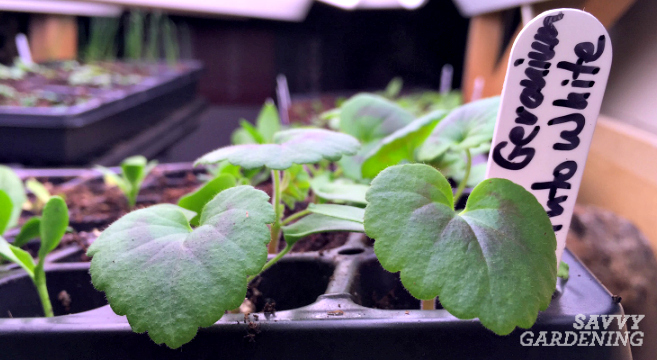
In late spring, I am a repotting queen! I use plug flats and cell packs to start my vegetable, flower, and herb seeds – they’re extremely efficient in terms of space – but, they don’t offer a lot of root room. After 6 to 8 weeks under the grow lights, many of the seedlings need to be repotted into larger containers to ensure continued healthy growth until it’s time to move them into the garden.
You’ll know your seedlings are ready to be repotted when their roots have filled their current containers and their foliage is crowding out the neighbours. Still not sure? Use a butter knife to pop a plant out of its pot and take a peek at the roots. If they’re well developed and encircling the soil ball, it’s time to repot.
Moving your seedlings to larger containers will help ensure a healthy root system and top-quality transplants for your garden. New containers should be about twice as large as the old ones.

Repotting 101:
- Gather all your materials (pots, potting soil, tags, waterproof marker, butter knife) first so that repotting is quick and efficient.
- Water seedlings before starting. Moist soil will cling to the roots, protecting them from damage and drying out.
- No tugging! Don’t pull the baby plants from their cell flats or plug trays. Use a butter knife, narrow trowel, or even just a long nail to prick the seedlings from their containers.
- If there is more than one seedling in your container, gently tease them apart for repotting.
- Place them in the new pot, lightly tamping the soil.
- Have a stack of labels ready to go and give each pot a fresh tag. Alternatively, use a waterproof marker to write the name of the plant on the side of the pot.
- Water with a diluted liquid fertilizer to settle the roots in the new soil and encourage healthy growth.
Do you have any more repotting tips to add?

I repotted a small tree sapling into a larger pot. It has been sitting there, doing nothing, for a month. It’s healthy and well watered, but has no new growth that I can see. Is that normal?
I had other trees of the same species, in pots that, also showed very slow growth but once in the ground took off running.
I planted a bunch of tomato seeds in a big old salad container with holes punched in the bottom. Not sure when/to move them they are small and purple (I think cause I’ve been putting them outside for sun and it’s windy) but they are starting to get their little true leaves now? I don’t know what I’m doing as this is my first time trying to plant things. Will I be able to separate them or are they kind of doomed?
Hi Ivy, welcome to the (garden) club! 🙂 Tomatoes actually transplant very easily, but I wouldn’t wait too long. Once they’ve got a set of true leaves (or two) I’d move them into their own pots. 3 or 4 inch diameter pots are perfect. Water so that the soil is lightly moist and give them a dose of fertilizer (diluted to half strength). That should help them along. Good luck! Niki
Could I use plastic cups for planting after I use the nursery flats?
Sure… just be sure to poke holes in the bottoms of the cups for good drainage.
Hi Niki,
I planted my seeds in the pellets with the white netting. Do I remove the netting before replanting?
Hi Debi, great question! And yes, I would remove the netting. Good luck! – Niki
Hi! I think I was too late in repotting my seedlings. I repotted my basil seedlings from the small seedling tray about 4-5 weeks after. It’s now repotted in small pots. I saw that the roots were already a bit crowded. Any tips on how to ensure the seedling’s survival?
Hey Elise, I’d give them a diluted dose of a liquid fertilizer (diluted by half the recommended dose) and plenty of light. They should bounce back fine. – Niki
Hi,
I am growing cucumbers and tomatoes. As I am new to this, I planted 3-4 seeds per pot and all have germinated. In some cucumber pots, I took away some of the seedlings but in some I have 3-4 plants growing together. I read that it will be difficult for the plants to thrive if I move all together outside to one pot. Is there any way a solution for this, e.g. using a large container when planting outside to accommodate the roots? I believe they are too big and entangled to separate at this point…Thank you.
Hi, great question! I would snip away some of the seedlings so you have one per pot. It’s hard to do, I know!! But will be worth it in the end. Leave the strongest plant and use scissors to clip the others off at the soil level. Cucumbers don’t like to have their roots disturbed and therefore don’t take well to being torn apart. Good luck! Niki
I started my seeds in small coconut cells. Do I need to remove the coconut pots before I transplant?
I would… I find they don’t break down as quickly as needed. Carefully peel away the coconut cells before transplanting. It’s best to water them beforehand – it reduces stress but also soften the coconut for easier removal.
I am developing a woodland garden. I have been removing an invasive shrub. I will need lots of
Perennials, a lot more than I can afford to buy ready to go in the ground. So I will be and have already stated seeds of astilbe,Hosta. They are in seed trays of 72. I would like to trans plant them to 1/2 gallon to one gallon pots for the next few months to increase root size to increase survival when we planted in the woods. There are no prepared beds, and they will be planted directly into the Undisturbed soil.
Would this plan work better than just Transplanting them Directly from the trays? At present time there is no Irrigation in the woods and I feel a bigger plant may have a better chance to Survive. This woodland garden is almost 3/4of an Acre.
What are your thoughts on which would be best?
Thank you for your time.
I am not an experienced gardener.
Hi Sherwood… sounds like you have the right idea. I wouldn’t put tiny perennial seedlings directly into the woods. I would pot them up into larger pots the first year and continue to tend them. In late summer/early autumn they can be moved to the woodland site. It would be beneficial however to create little planting pockets for them when you do transplant them into the soil. Loosen the site (in the woods) and amend with some compost. These aren’t native plants, they’re cultivated perennials. If you want a woodland garden looks, consider plants native to your area – consult a local garden centre. You may also want to add some of these plants/ferns to your woods. Good luck!! Niki
Which liquid organic fertilizer do you recommend?
Thanks!
A fish or seaweed fertilizer is perfect! 🙂 – Niki
I believe that trying to grow seeds on window sills is futile, but grow lights aren’t necessary. The spectrum in them is necessary for promoting blooms, fruit, etc., but not for foliage growth. Plain, cheap 4′ fluorescents are adequate to grow all plants before transplanting outside.