
This post may contain affiliate links. If you make a purchase through links on our site, we may earn a commission.
Finding aphids on any plants—and especially aphids on tomato plants—is a sure way to make a gardener groan. It’s almost a wonder we can harvest any tomatoes at all considering all the challenges that come with growing them. Too hot and they lose their blossoms, too damp and they get fungal infections, and of course, we have to deal with the insects with sights on the plants and fruits. This includes aphids. Aphids on tomato plants don’t mean the end of your harvest, however. These insects are actually less detrimental to your tomato yield than their scary-looking clusters may give on. In this article, you’ll read all about aphids and how they feed, how to prevent an aphid infestation, and what to do when aphids do arrive. And you’ll get expert tips for growing aphid-resistant tomato plants.

What are aphids?
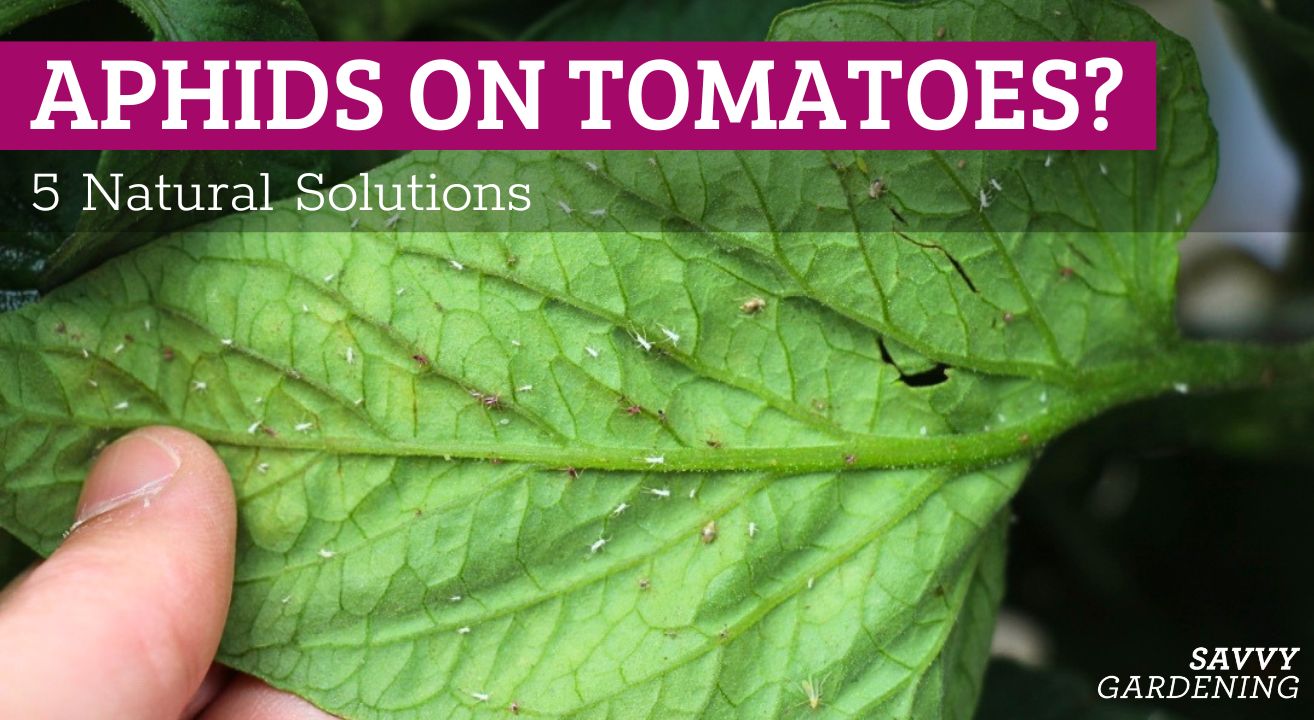
Aphids are pear-shaped insects that only grow to 1/16 to 1/8 inch long. Their color varies by species and could be green, yellow, black, brown, red, or pink. Some have transparent wings, though most are wingless. They all have antennae and cornicles, which are two tubes protruding from the abdomen.
With thousands of species of aphids, we can be grateful there are only two affecting tomatoes: potato aphids and green peach aphids. Aphids set out from their overwintering habitat in the early spring in search of their first meal, making young, freshly transplanted plants most susceptible to the insect’s damage. These insects can arrive in your garden at any time and may even overwinter there. For as small and slow-moving as they are, a few aphids can’t do much damage to one plant. It’s the large numbers of aphids you have to watch for.
How do aphids damage tomato plants?
Whether an aphid is feeding on a mustard leaf or a tomato plant, it’s sucking the sap from the plant’s tissues. It inserts its beak into the foliage, pulls out sap, and leaves behind a sticky waste called honeydew. The honeydew can cause a sooty mold to form, making stems and foliage blacken. The leaves may also shrivel.
Aphids on tomatoes cause multi-level damage, first by pulling nutrients from and weakening the plant, then by reducing the amount of area the plant tissues have to carry out photosynthesis, and finally by shriveling the leaves to the point that the fruits can experience sun scald, which is essentially a sunburn. These insects can also transmit various mosaic viruses, including tobacco and tomato mosaic virus, to tomato plants.

Identifying aphids on tomato plants
The two aphid species interested in your tomato plants have different appearances. The potato aphid may be pink, green and pink mottled, or light green with a dark stripe. Its cornicles are long but slender. The green peach aphid is a pale-yellow to green color, and its cornicles are much shorter. Regardless of which species of aphids you have, the control protocol is the same.
How many aphids is too many aphids?
Tomato plants are surprisingly tolerant of aphid damage without losing their ability to produce fruit. The number of aphids that is too many depends on several factors:
- The older and more established your tomato plants are, the more able they are to handle pest pressure.
- If your plants are healthy, they can also likely keep producing while being infested by aphids.
Realize that aphids reproduce quickly, and their population can grow overnight, so it’s worth keeping an eye on them. If you see just a few or the cluster is confined to one small area of a large plant, don’t panic.

How to prevent aphids on tomato plants
The best way to keep aphids from attacking your tomatoes is to keep your tomato plants healthy and strong. Insect pests target the weakest of plants for their feeding, just like we see on the televised nature programming of wild predator going after the slowest and weakest prey. This is nature’s way.
Ways to manage aphids on tomato plants
You have several options for managing aphids on tomato plants. Think of this as your integrated pest management (IPM) plan. Here are the five options that I’m most likely to turn to:
- Beneficial insects
- Manual removal
- Insecticidal soap
- Horticultural oil
- Remaining hands off
I explain each below. Choose those that work best with your gardening style and the level of aphid infestation you’re comfortable with.

Method 1: Rely on beneficial insects
Regardless of how many aphids are on your tomato plants, attracting beneficial insects to your garden is always a good idea. Lady bugs, lacewings, syrphid fly larvae, damsel bugs, and parasitic wasps are just a few predators that would be happy to help manage the aphids on your tomato plants. Let biology work in your favor! Companion planting tomatoes with the insects’ favorite plants can potentially attract bees, too, resulting in a win for everyone. (Read Jessica’s advice about the best plants for beneficial insects.)
Method 2: Manual removal by hand or hose
Especially for small aphid populations, hand removal or washing them away with a strong stream of water from a hose nozzle are practical solutions. Rain and strong wind may do the same. You can also prune away the parts of the plant with localized aphid swarms, as long as you’re not removing too much of the plant. Use clean garden snips or hand pruners for this task.

Method 3: Insecticidal soap
For more serious aphid infestations on tomatoes, insecticidal soaps are an option. As a soft-bodied insect, the aphid is easily damaged by coming into direct contact with insecticidal soap. You must thoroughly coat the areas of aphid infestation, including the undersides of leaves. Because the aphids have to have direct contact, you may need to apply the soap multiple times, but knocking back the population just once may be all your tomato plants require.
You may find recipes for DIY insecticidal soap using dish soap. This won’t be as effective as an insecticidal soap formulation and can damage your plants. Carefully read and follow the insecticidal soap’s label instructions, even if you’re using an organic product, for your plants’ health and food-safety reasons.
Method 4: Horticultural oil
Like insecticidal soap, horticultural oil can be effective for larger-scale aphid problems on your tomato plants. They’re generally safer to use than other pesticides, dissipating quickly and not affecting the beneficial insects you’re trying to attract. Horticultural oils can damage plants if used incorrectly, so read the label and follow the instructions with caution.

Method 5: Do nothing
The “do nothing” method for controlling aphids on tomato plants is just like it sounds. Because well-established plants can tolerate some aphid pressure, you can keep watch and hope for the best. Sometimes you need to let the aphid population build up before the beneficial insects show up and take control. Likewise, wind and rain moving in can remedy the problem with no intervention from you.
Quick tips for growing healthy, pest-resistant tomato plants
Because healthy tomato plants are the best protection against aphids in the first place, do what you can to keep yours growing strong, including:
- Fertilize properly. Take a soil test, and don’t over-apply nitrogen. The tender new growth brought on by nitrogen applications is what aphids love most.
- Transplant out healthy plants to begin with. This is a good practice no matter the plant you’re growing or the pest you’re trying to avoid.
- Cover small tomatoes with row cover or insect netting to keep aphids off while the seedlings are getting established. Remove the row cover when the plants begin setting flowers.
- Give the plants enough space. This will help them remain healthy and help with airflow between the plants, which may reduce aphid buildup. Read about how far apart to plant tomatoes.
When you inevitably find aphids in your garden, and aphids on tomato plants, don’t panic. Start with assessing your situation, and then make a decision about how you want to manage it. By reading this article, you’ve learned how aphids can damage tomato plants, five ways to deal with these insects, and additional tips for keeping your tomato plants healthy, which is the best defense against insect pests of all kinds.
Now you can turn your attention to what really matters—the reason we all grow tomatoes to begin with. Are you canning sauce or diced tomatoes, making sun-dried tomatoes to give as gifts, or freezing whole tomatoes to use all year long? Maybe you’re planning a summer full of fresh-tomato salads and BLTs. With a full, healthy tomato harvest, you can do all of these.


Leave a Reply