
This post may contain affiliate links. If you make a purchase through links on our site, we may earn a commission.
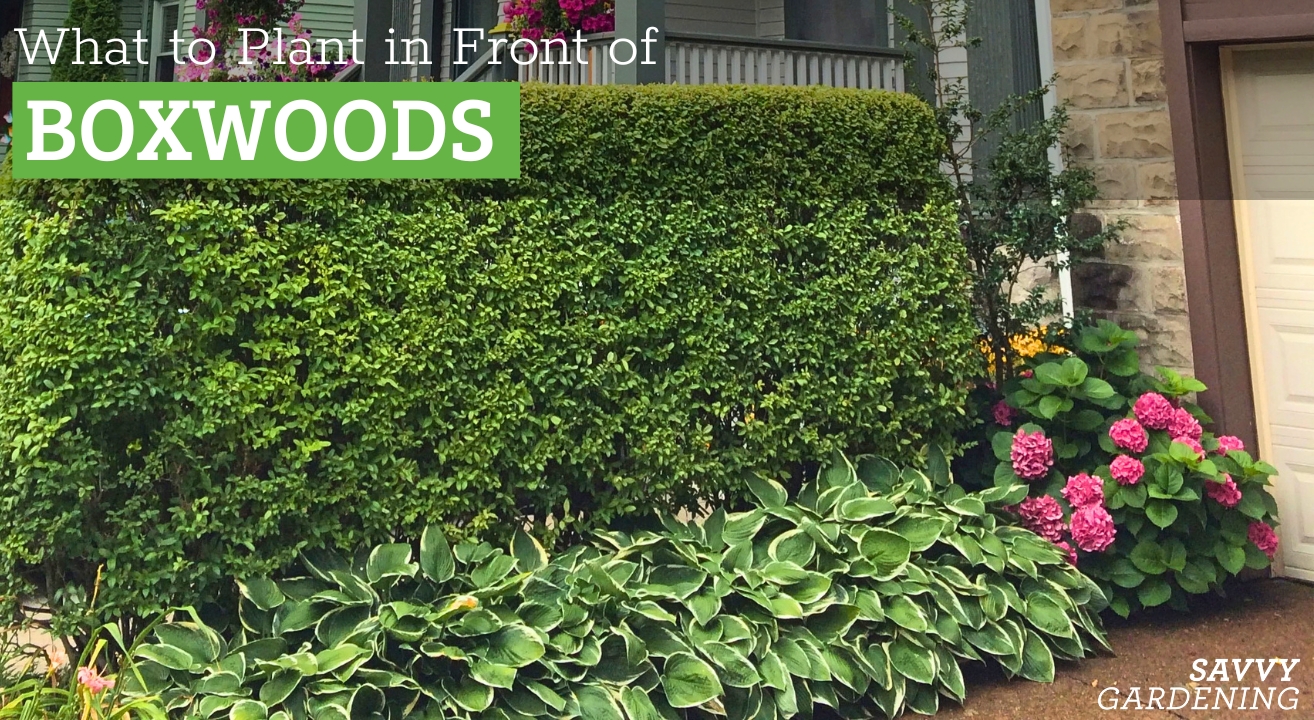
Boxwoods can be fantastically formal hedges or the basis of whimsical topiaries on their own, but, if you know what to plant in front of boxwoods, they’re also the perfect backdrop for a dazzling mix of companion plants. You can pair boxwoods with a combination of smaller shrubs, perennial plants, herbs, and even flowering bulbs. This supplies winter interest, attracts pollinators, keeps deer away, and more. No matter what effect you’re after, the plants you choose should play nicely with your boxwoods and fit in with your growing conditions as well as the size of your landscaping area. In this article I’ll share 20+ ideas for what to plant in front of boxwoods.

Why boxwoods are so popular
Hailed as “man’s oldest garden ornament,” boxwoods have served as the “bones” or foundational plantings in classical European gardens for centuries. By the mid-1600s, settlers began establishing them in North America as well. In part, this evergreen shrub has held its own over the years because it’s simply so versatile. When carefully spaced and trimmed, multiple boxwood plants can be fashioned into a tall boxwood hedge. Or the glossy green foliage of individual, large specimens can be trimmed and trained to form natural or more sculptural shapes. And because this perennial shrub retains its leaves year-round, it provides extra visual interest even in the dead of winter.

Types of boxwood
As there are more than 200 boxwood cultivars available, you’re bound to find one that fits your needs. Here are some of the most popular types:
- Winter Gem boxwood (Buxus microphylla japonica “Winter Gem”). Growing well in USDA Plant Hardiness Zones 5 through 9, Wintergreen boxwood can reach three to four feet tall at maturity with a two to three foot spread.
- NewGen® Freedom boxwood (Buxus “SB300”). Suited to zones 5 through 8, this improved boxwood grows faster than traditional varieties and boasts excellent disease resistance. Expect the plants to reach heights of three to five feet.
- NewGen® Liberty Belle boxwood (Buxus sinica var. insularis “RLH-BI” PP 24,443) This Korean boxwood is bred to be shorter and wider than other types. This mature shrub will be just two feet tall and up to three feet wide. Also worth noting, sustained cold weather can cause its leaves to go from green to purplish-bronze. Good disease and leafminer resistance.
- Little Missy boxwood (Buxus microphylla “Little Missy”). For something even smaller, try Little Missy which grows two feet tall and wide. Good for zones 5 through 9, Little Missy even lends itself to container gardening.
- Variegated boxwood (Buxus sempervirens “Variegata”). Unlike the standard green boxwood foliage, variegated boxwoods feature green leaves with creamy yellow borders. These striking plants thrive in zones 5 through 8 and can grow up to six feet tall with a three to five foot spread.

What makes a good boxwood partner
Some plants partner better with boxwoods than others. To ensure success with your own plant combinations, you should first take stock of your boxwoods’ needs. Boxwoods flourish in well-drained soil with a neutral pH. They also prefer full sun, but they can handle some partial shade. The partner plants you choose must be able to tolerate similar growing conditions.
Once well-established, boxwoods are relatively low-maintenance and drought-tolerant. But, if you’ll be installing new boxwoods along with their companion plants, work plenty of compost into the planting bed. This improves the soil’s fertility, nutrient availability, and structure.
Unless your boxwoods are already mature, you’ll also need to consider how large they’ll grow as they age and match your partner plants accordingly. You wouldn’t place a witch hazel shrub in front of a Baby Gem boxwood, for instance, since the former could easily dwarf the latter!
Finally, when it comes to knowing what to plant in front of boxwoods, it also helps to think about creative juxtapositions of potential partner plants’ foliage texture, color, leaf size, shape, and scent—and, of course, the color and size of partner plant blooms.

What to plant in front of boxwoods for year-round interest
There are a couple of good ways to create year-round interest in the garden. Suggestions include having something in bloom for as much of the year as possible and playing with interesting combinations of growth habit, shape, and texture.
- Early bloomers—Intersperse snowdrops, crocuses, and grape hyacinths for extra-early flowers. Other good options include winter aconite and Grecian windflower.
- Berry good—Dwarf varieties of currants and gooseberries can grow perfectly well in the same soil conditions that support boxwoods. (Bonus: the fruits will support area wildlife and can feed you, too!)
- Grasses and evergreens—Mix and match delicate tufts of prairie dropseed, swaying river oats, and arresting dwarf junipers like Blue Star.

What to plant in front of boxwoods for lots of summer color
Is eye-popping summer color your thing? Here’s what to plant in front of boxwoods in that case:
- Reds, oranges, and pinks—For red-hot blooms try Oriental poppies, cock’s comb, daylilies, or special zinnia mixes like “Fireball Blend.” For pink flowers, consider any number of sweet William (Dianthus) mixes, Rose Checker mallow, and clumping pink yarrow.
- Yellows and yellow-greens—Create a tough, low-growing carpet of Goldmoss sedum as a base and plant in Lady’s mantle, complete with elegant sprays of yellowish-green flowers.
- Blues and purples—For brilliant blues, try borage and catmint. For blue-to-purple blooms, opt for Ageratum, asters, bachelor’s buttons, and allium bulbs.

What to plant in front of boxwoods that the deer won’t eat
Depending on how many plants you’ve already lost to hungry deer, you might be wondering what to plant in front of boxwoods that these four-legged foragers won’t devour. Happily, there are some options that are widely considered to be deer resistant. While the aromatic foliage of an herb garden planted in front of boxwoods is pleasant to us, it’s less appealing to deer. Try herbs like rosemary, thyme, violets, and lavender as these are loaded with strong-smelling chemical compounds which give these plants their culinary and medicinal properties.
Russian sage is another strong-smelling plant that deer dislike. A member of the salvia family, Russian sage has silvery foliage and small purple flowers. They really pop when contrasted with boxwood’s dark-green leaves.

What to plant in front of boxwoods if it’s shady
Considering what to plant in front of boxwoods if your spot is shady? Remember that your boxwood shrubs themselves need five to six hours of sun exposure per day to thrive. That said, however, the size of your boxwoods—and their location on your property—may cast a little extra shade over your companion planting area.
A few attractive, shade-loving options include coral bells—also known as Heuchera—ferns, begonias, impatiens, and hostas. With its ruffled, yellow-charteuse foliage, the “Wiggles and Squiggles” hosta is an excellent choice for contrast against dark green boxwoods.

How close to your boxwoods should you plant?
Besides what to plant in front of boxwoods, it’s imperative that you consider how close you’ll plant those choices. If you place companion plants too close to your boxwoods, you may reduce the boxwoods’ access to sunlight and fresh air. When positioning other evergreen shrubs or long-lasting perennials, leave a buffer of at least 6 inches to one foot around the boxwoods. As for smaller annuals, as well as very low-growing plants and ground covers, you can plant these closer to the boxwoods. They’re less likely to block the flow of light and air.

More inspiration and ideas
- Classic combinations—Choose companion plants which complement the overall size and shapes of bigger boxwoods. For example, to echo more rounded boxwood shapes, you might include a few dwarf hydrangeas. Need something to stand out against tall, squared boxwoods? The bold, white flowers of some old-fashioned peony types work well.
- Nature note—Boxwoods can provide birds and other critters much-needed shelter. To give area wildlife and beneficial insects a boost, you might add some native plants, a birdbath, and even a solitary pollinator house.
- Mushroom mix-in—For extra interest, mix red wine cap mushroom spawn in with straw or wood chip mulch around the base of your planting bed.
- Edible ideas—Perennial berries and herbs, like alpine strawberries, thyme, or Greek oregano are beautiful and delicious. Or plant temporary edibles like leaf lettuce or curly parsley.
One more thing! It’s fun to think about what to plant in front of boxwoods, but don’t forget to keep the boxwoods themselves healthy. Here are some quick tips:
- Prune your boxwoods annually in spring as needed.
- Water regularly until new plants are well-established. Mature boxwood are drought resistant and shouldn’t need supplemental watering.
- Add mulch or plant a ground cover like creeping thyme to conserve soil moisture and cut down on weeding.

Box it up!
With these ideas about what to plant in front of boxwoods you’ll add extra visual interest to your landscape year-round. It really just comes down to your specific growing conditions, your personal goals for the area, and your design aesthetic. No matter what, boxwoods make the perfect backdrop.
Already have established boxwoods? Or are you planting everything from scratch? Either way, you can mix other evergreens, perennials, annuals, herbs, and bulbs along with those boxwoods in creative ways. Some of these combinations take into account the need for shade-tolerant or deer-resistant plants, while others satisfy a love of color, a wish to attract and support pollinators, or the need to make winters a little less dreary.
The extent to which you shape your boxwoods—and the way you shape them—will inform some of your choices. But you can further influence the look and feel of your companion plantings by juxtaposing interesting colors, textures, and plant growth habits, too.
For more ideas and inspiration with shrubs be sure to read these articles:

Thanks for all the great ideas!